5 Chinese Men, and Their Names Are Staying in America
Published:
Author: Koutian Wu; GitHub: ktwu01
Tonight I want to set five names side by side, Jensen Huang, Ed Lee, Chao Wu, Chen-Ning Yang, and my advisor Zong-Liang Yang. One has just been dragged down from his pedestal. One has his name carved onto an airport. One is climbing, level by level, inside a state legislature. One stood up at the Nobel ceremony nearly seventy years ago and publicly thanked Chinese culture. And one is the man who led me through this door. Their five stories, set side by side, piece together every route by which Chinese people have gained a foothold in America.
A note before the piece. I wrote this in my personal capacity. It represents only me. It does not represent any other person, and it does not represent any organization.
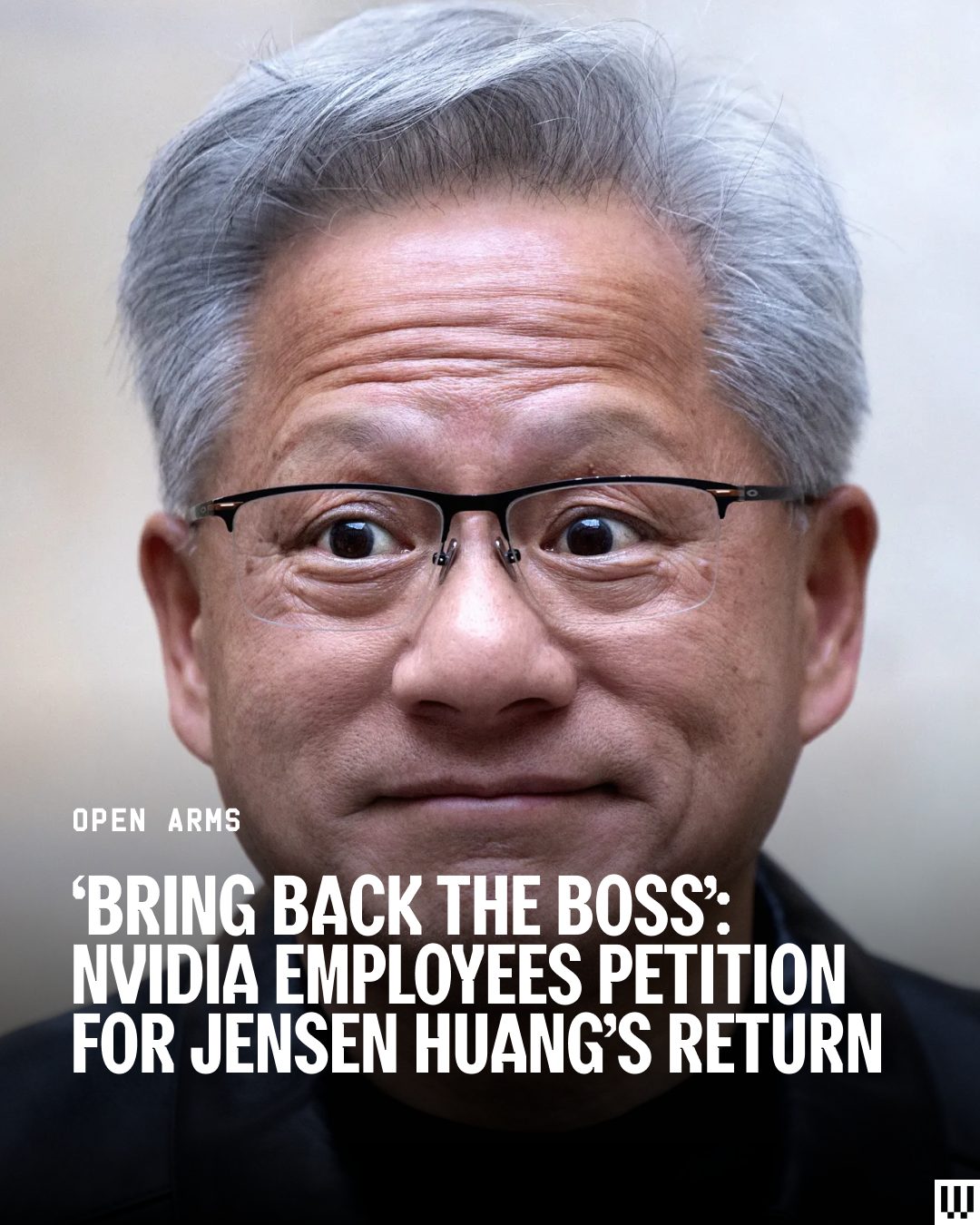
Yesterday, November 12, 2026, Jensen Huang resigned from every post he held at NVIDIA, chief executive, president, and board member, gone in a single night.
The sequence is short. On October 29, The New York Times reported that United States intelligence agencies had identified a woman executive at the Singapore data center company Megaspeed as an intelligence asset passing information to Beijing, and that she had a close relationship with Jensen Huang, with suspicions involving diverted high end chips. On November 8, Huang published an open letter admitting an extramarital affair and apologizing to his wife and family, and NVIDIA’s board announced an independent investigation the same day. On November 12, he resigned, ending a 33 year run at the company he founded. From the first report to his fall, the whole thing took two weeks.
As of today, no public regulatory filing and no court judgment has established that Jensen Huang leaked any secrets, and none has established that the woman executive broke any law. On October 31, Singapore’s Ministry of Home Affairs stated plainly that its government and officials had never expressed concern about her and had never investigated her. But in the court of public opinion, the words spy, honeypot and traitor had already delivered the verdict.
I call that racial bias. A legal immigrant who arrived in America at nine years old and built the world’s most valuable company out of a Denny’s booth with his own ability had the model immigrant label torn off him overnight and replaced with suspected spy. The affair is Huang’s own fault. He admitted it and he apologized, and I am not here to wash that away. But sliding from one man’s private failure, along the line of his race, all the way to a loyalty trial for an entire people, that step I refuse to accept. I am Chinese. I am Asian. I support Jensen Huang, and I am speaking up about this.
Tonight on X, plenty of Asian users were talking about the same thing. One called it a sad day for America, a hard working legal immigrant who built a trillion dollar company from Denny’s on his own dime, dragged down overnight, and asked which side actually raised America into a technical powerhouse. Another said it more harshly, stop fantasizing about being the good kid, the good student, the model citizen, and stop raising children to become the next Jensen Huang, Elon Musk or Alexandr Wang, raise them instead to become presidents, to become the people who write the rules, because that is the only way Asians will be treated as equals in this country. A third hoped that Asians, and Chinese STEM men in particular, could unite around this moment. Not every word of that is right, but one feeling in it is real. Being well behaved does not buy you safety.
So tonight I want to set five names side by side, Jensen Huang, Ed Lee, Chao Wu, Chen-Ning Yang, and my advisor, Dr. Zong-Liang Yang. One has just been pulled down from his pedestal. One has his name carved into an airport. One is climbing, level by level, inside a state legislature. One stood at the Nobel Prize ceremony nearly seventy years ago and publicly thanked Chinese culture. And one is the man who led me through this door. Put together, their stories map every route by which Chinese people can stand firm in America. Lee first. His name was not new to me tonight. On February 14 this year I was at San Francisco International Airport, seeing someone off on a flight home to China, and in the International Terminal I saw his bas relief portrait. I filmed several short videos about it right there, and I wrote one sentence that day. The international terminal at San Francisco International Airport is named for Edwin Lee, a Chinese man, it feels close to home, and he has truly earned it, I hope more Chinese people become this remarkable. Tonight I want to read his whole story again, from the beginning, carefully.
Edwin Mah Lee was born in 1952 in the Beacon Hill neighborhood of Seattle. His parents had immigrated from Taishan, in Guangdong. His father cooked, his mother worked as a seamstress and a waitress, and he grew up with five siblings in public housing, the low rent homes a city provides for poor families. As a kid he helped out in the restaurant where his father worked. A boy raised in subsidized housing, doing homework in the smell of a kitchen. As starting points go, it does not get more ordinary than that.
He went east to Bowdoin College in Maine, then took his law degree at UC Berkeley in 1978. As a student he interned at the Asian Law Caucus in San Francisco, and after graduating he stayed on as its managing attorney. The Caucus takes legal cases for the Asian community, and Lee helped tenants in a Chinatown public housing complex run a rent strike to force the city to fix unsafe buildings. He fought for immigrants and renters. Put in modern terms, the first job of his career stood directly across from city hall, suing city hall.
Then he changed sides of the table. In 1989 he joined city government as its first Whistleblower Ordinance investigator. Over the next two decades he ran the human resources department, the human rights commission, and the public works department, and in 2005 he became City Administrator, the person in charge of the money, the projects, and the first ten year capital plan the city ever had. None of it is glamorous work. No cameras, no applause, just budget tables and sewers. I keep thinking this kind of work is where a city is actually decided, in the hands of people nobody photographs.
On January 11, 2011, Mayor Gavin Newsom left to become Lieutenant Governor of California, and the Board of Supervisors voted Lee in as interim mayor. That November he won the election outright and became the first elected Chinese American mayor in San Francisco history. He won again in 2015. On December 12, 2017, he died in office at 65, after a cardiac arrest the night before in a grocery store near his home. No retirement, no farewell tour. He wore the title of mayor into the last day of his life.
Almost two years later, on November 13, 2019, the Airport Commission dedicated the departures hall in his name, Mayor Edwin M. Lee International Terminal Departures Hall, written across the wood paneled wall of the lobby. In 2022 a bronze bas relief portrait of him went up in the same hall. I already stood in front of that wall once this February. Next time I pass through SFO, I think I will stop again and look at it properly.
Talking about him makes me want to set two other names next to his.
One is Chao Wu, who walked a road very much like Lee and belongs to a generation one step later. Wu was born in 1977 in Yingshan, Hubei. He graduated from the University of Science and Technology of China, came to Maryland in 2003 for his doctorate, and finished his PhD in electrical engineering in 2009. He worked as an engineer and a data scientist, at Garmin and at Booz Allen Hamilton among other places. In 2018 he was elected to the Howard County Board of Education and later chaired it, and in January 2023 he was sworn in as a member of the Maryland House of Delegates, where he still serves. A school board sounds tiny, and yet school is the closest most ordinary families ever get to politics, buses, textbooks, lunches, budgets, all argued over one table. He stayed at the level nearest to people until he had put in the years, and only then stepped up one level. In September 2025 I met him at the USTC Alumni AI meetup in California, and at breakfast I took a photo of him with several senior alumni. On September 28, 2026, I wrote to him formally to reconnect, and to tell him he has my support.
The other name is Jensen Huang, and he came through a completely different door. Huang was born in Taipei in 1963 and raised in Tainan. At five his family moved to Thailand, and at nine his parents sent him ahead to America, to an uncle in Tacoma, Washington, who enrolled him in a boarding school in Kentucky. The school mostly took in troubled boys. The uncle believed it was a prestigious prep school, and every time I read that part I find it both funny and a little heartbreaking. The family reunited in Oregon, and at fifteen Huang was washing dishes at a Denny’s. He finished high school at sixteen, studied electrical engineering at Oregon State, and later took a master’s at Stanford. In 1993, at thirty, he sat in a booth at a Denny’s in San Jose with two partners and founded NVIDIA. He has been its CEO ever since. The chain where the teenager washed dishes and the chain where the man founded his company are the same chain. Think about that for a second and it still sounds made up.
Today, most of the chips running inside the machine rooms of people who build AI come from NVIDIA. My own research is no exception, training and inference both run on the road he paved. NVIDIA is now the most valuable company in the world, and the man standing at the center of the road building arrived in this country at nine years old, barely able to speak English.
Go back half a century further and there is Chen-Ning Yang. Yang was born in 1922 in Hefei, Anhui, graduated from the National Southwestern Associated University, and came to the University of Chicago for his doctorate in 1945, later joining the Institute for Advanced Study at Princeton. In 1954 he and Robert Mills proposed Yang-Mills theory, the skeleton underneath what became the Standard Model of particle physics. In 1957 he and Tsung-Dao Lee received the Nobel Prize in Physics, at 35, the first Chinese Nobel laureates in history. He was not even an American citizen at the time. He travelled to Stockholm on a Chinese passport.
On December 10, 1957, at the Nobel Banquet, he stood up and spoke. He said he was heavy with the awareness that he was, in more than one sense, a product of both the Chinese and Western cultures, in harmony and in conflict. He said he was as proud of his Chinese heritage and background as he was devoted to modern science, a part of human civilization of Western origin, to which he had dedicated his work and would continue to dedicate it. In 1957, a Chinese man stood at the highest ceremony in world science and said out loud where he came from, and thanked Chinese culture for it. That speech is nearly seventy years old. Reading it today, it still carries weight.
Where did his name stay? Yang-Mills theory is printed in every particle physics textbook, and physicists all over the world speak his surname every day. He later founded the Institute for Theoretical Physics at Stony Brook, returned to Tsinghua in 2003, and died in Beijing in October 2025, at 103.
Five men, five doors. Lee walked from a civil rights law office into city hall. Wu walked from a doctorate and an engineering desk into a state legislature. Huang walked from a dishwasher’s shift into the center of the technology industry, and was dragged down from it in a single night. Yang walked from a wartime Chinese university onto the Nobel stage. And my advisor, Zong-Liang Yang, walked into a school that had no Chinese person in it and brought Chinese students out of it, cohort after cohort. What they share is almost plain to the point of being boring. None of them shouted his way in. Each of them did one concrete thing for decades. Lee needed 41 years to get from the Asian Law Caucus in 1978 to that wall in 2019. Huang sat in the same chair at the same company for 33 years. Wu took 14 years to get from his 2009 doctorate to the state house in 2023, and nobody would call that fast either. Yang’s name has been inside physics for seventy years, and it is still there.
Last, the one closest to me, my advisor, Dr. Zong-Liang Yang.
Professor Yang teaches at the University of Texas at Austin and works on land surface processes. The Noah-MP land surface model he led the development of is used by people running weather forecasts and climate simulations all over the world, and my own master’s report is a benchmark study of that very model. When he arrived at the Jackson School of Geosciences more than twenty years ago, there was not a single Chinese person in the whole school. Nobody spoke up for him. Through sheer professional excellence, step by step, he proved that Chinese people can do this too. Early on he taught us that Chinese people should speak up for themselves, and speak up for Chinese people. In the community where he lives, he speaks up for Chinese people often, and back in our research group he teaches his students the same thing, again and again. His whole family are Americans, and when he stands on American soil and speaks for Chinese people, his back is straight. This fall he is on sabbatical, travelling the world to give lectures, Melbourne, Sydney, one stop after another. Spreading scholarship, the way I see it, is also spreading the strength of Chinese people. He is one of the people I respect most in this world.
His name does not hang on any wall. His name is written inside a model, inside code that runs across the whole planet, and inside the more than eighty students he has mentored, students who are now professors and researchers scattered across the world. There are many ways for a name to stay. This is the one he chose.
I know what some people would say here. These men are Americans, and their stories have nothing to do with a Chinese student holding a student visa. I used to think exactly that, that Chinese success in America belonged to other people and had nothing to do with me. But a name does something practical. It changes the air in the room for whoever walks in next. A kid from public housing can become a mayor. A PhD from a small county in Hubei can become a state delegate. A boy who survived a Kentucky boarding school can define an industry. After them, the next person entering those rooms no longer has to spend his energy proving that a Chinese face belongs in that chair at all.
So when I look at that airport wall now, it feels nothing like looking at a medal. An airport is where every immigrant story starts, luggage carts, boarding passes, an announcement you only half understand. When Lee’s parents landed, nobody knew where their surname would end up. More than sixty years later, that surname hangs over the departures hall of the city their son served, sending people off every day, and welcoming people home.
The name stayed.