
Air Canada Was a Mess: Three Seats, Fourteen Hours of Lavatory Odor, a Go-Around, and a Towing Delay
Published:
My verdict on Air Canada after flying from Singapore to Austin through Vancouver is simple: what a mess.
Author: Koutian Wu; GitHub: ktwu01
The journey was not uniformly bad. It felt more like a randomized experiment. On the fourteen-hour trans-Pacific leg, I unexpectedly had an entire row to myself—but spent the flight next to a lavatory odor. The connecting flight then involved a go-around, a towing delay, and an ugly recent on-time sample. The Pad Thai I ate at YVR was disappointing too; it merely sent me into a carbohydrate crash, after which I slept through nearly the entire flight.
AC20: I had seats 30A, 30B, and 30C to myself
On July 19, 2026, I took Air Canada AC20 from Singapore to Vancouver, a flight of roughly fourteen hours.
After boarding, I discovered that I was the only passenger in row 30’s A, B, and C seats. This is close to the best random outcome an economy passenger can get: room to lie sideways, no fight over armrests, and no need to keep moving for seatmates.
Unfortunately, I am 182 cm tall. Three economy seats still were not long enough for me to lie flat. I had to bend my legs, sleep diagonally, and keep changing positions. It was far better than sitting upright for fourteen hours, but it was not a bed.
The real problem was row 30’s proximity to the lavatory.
This was not an occasional smell when someone opened the door. For long stretches, the lavatory odor persisted. I had three seats, but it felt as if I had slept outside a restroom for fourteen hours. The luck of extra space was steadily cancelled by the cabin air.
That contradiction defined AC20:
- I won the space lottery.
- At 182 cm, I still could not lie flat.
- I was surrounded by lavatory odor.
- I nevertheless slept better than I would have in a full economy row.
A long-haul experience depends on more than whether adjacent seats are empty. Seat location, ventilation, cleaning frequency, and odor control determine whether passengers can rest. Two empty seats were luck; persistent lavatory odor was a cabin-operations problem.
But the AC20 meal was genuinely good—and I saw the sunrise
Criticism aside, AC20 had a part worth recognizing: the in-flight meal exceeded my expectations.
The tray included several large shrimp that tasted fresh and sweet, rather than dry or chalky after sitting in an airline meal. The curry chicken with rice was also good; the sauce, chicken, and rice worked well together. This did not fix the lavatory odor, but it showed that not every part of Air Canada’s service failed.
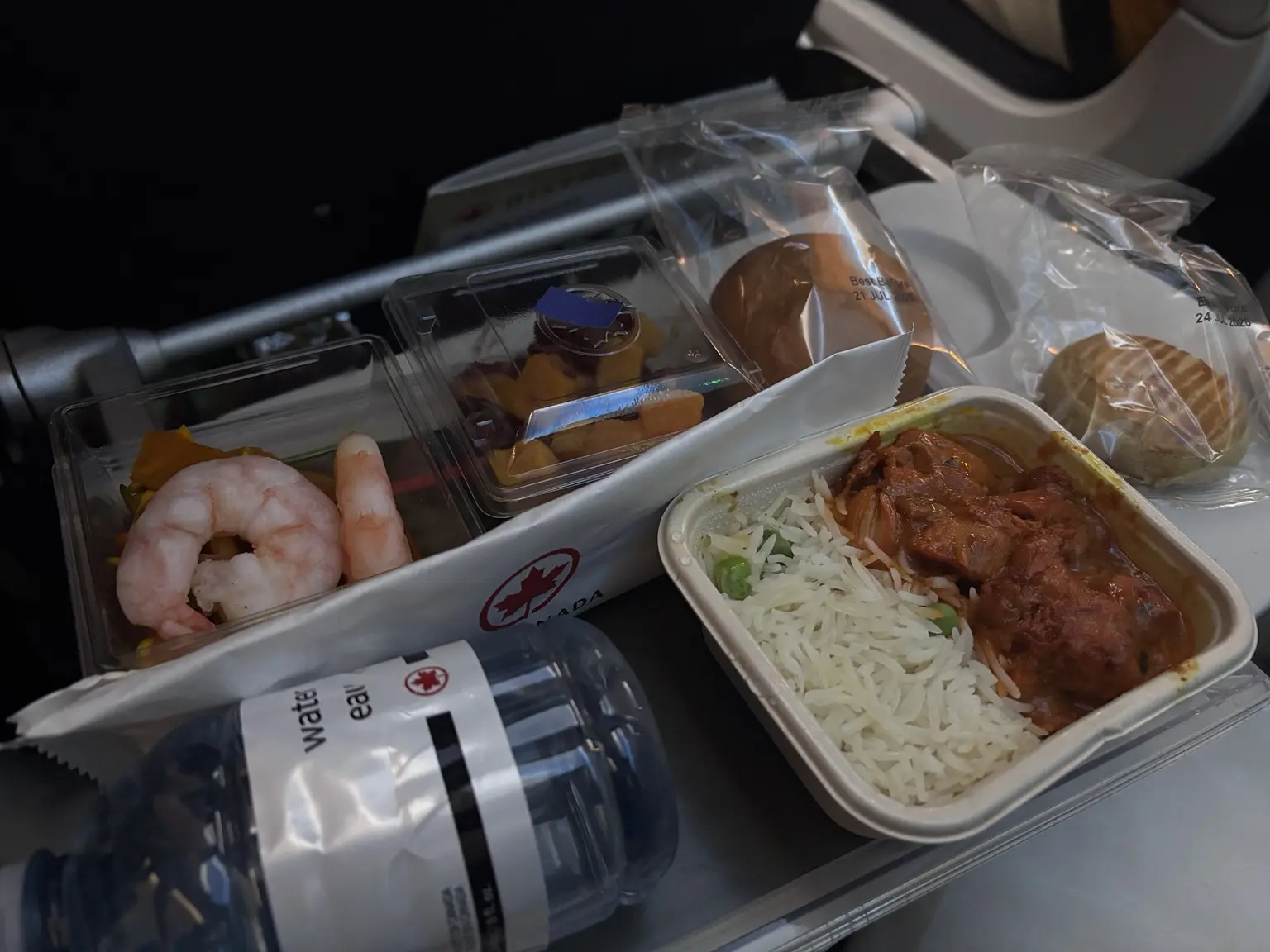
The AC20 meal: fresh, sweet shrimp and good curry chicken with rice.
During the trans-Pacific flight, I also saw the sunrise through the cabin windows. Golden-orange light passed through a row of windows and briefly lit the cabin. The long flight was exhausting, but the sunrise left one scene worth remembering from those fourteen hours.
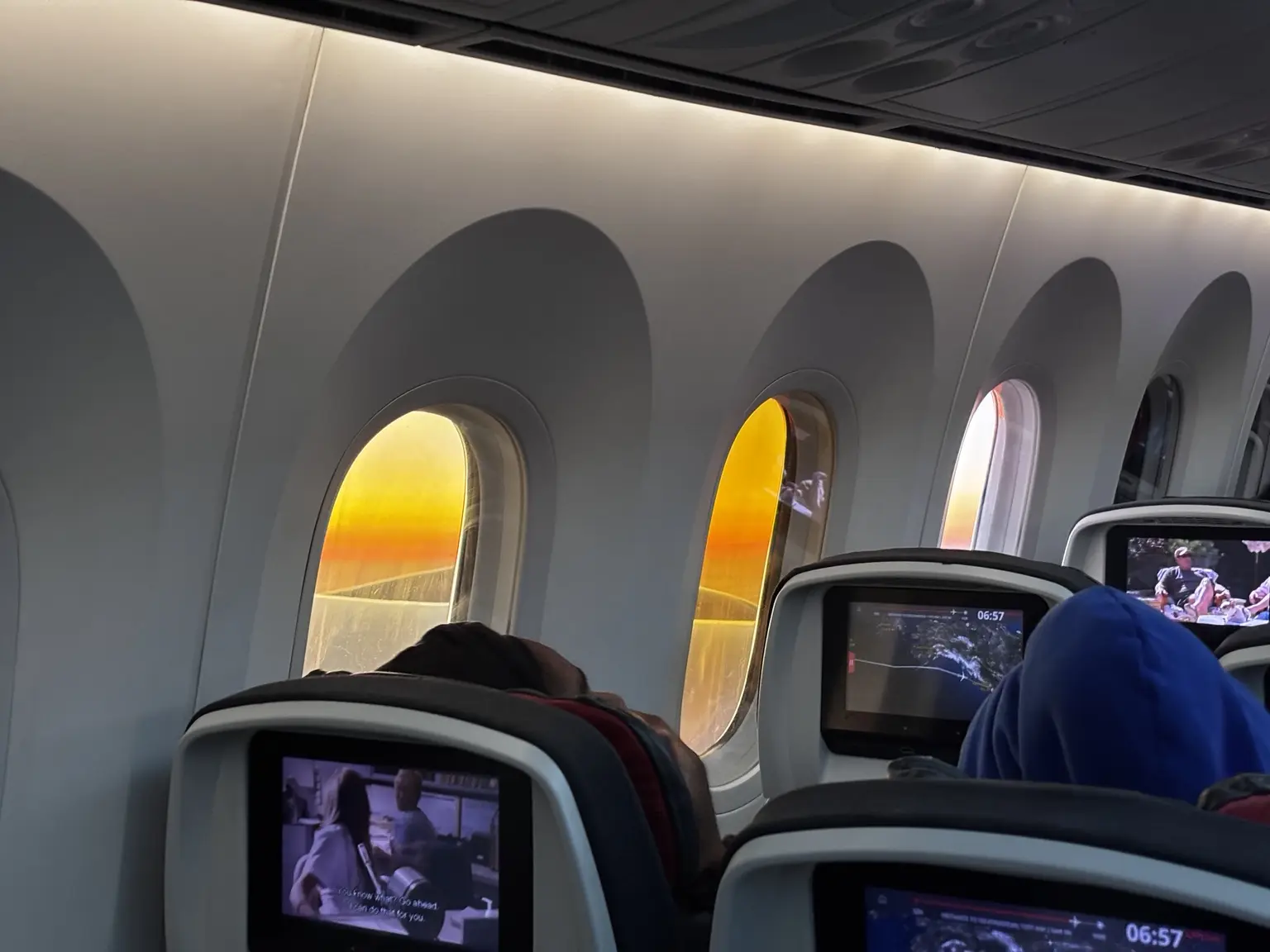
Sunrise entering the cabin through a row of windows during the trans-Pacific flight.
That balance belongs in the full assessment. Air Canada’s cabin odor, turnaround, delay, and baggage performance deserve criticism. The AC20 meal was still genuinely good, and the sunrise was worth seeing. One journey can contain both operational failures and satisfying moments; there is no reason to erase either side to strengthen the conclusion.
At YVR, the Air Canada problems kept stacking up
After AC20 reached Vancouver, I connected to AC1762 for Austin.
When I checked AC1762 in Umetrip, its 30-day display initially showed three on-time flights among five samples. After today’s flight was added, it became three among six—moving the small displayed sample from 60% to 50%.
This is not enough evidence to estimate the route’s long-run performance. Six observations are too few, and Umetrip’s display may not match an airline or regulator’s official on-time metric. But for a passenger waiting that day, the signal was direct: this flight had not looked reliable recently, and mine added another delay.
Air Canada sent this message:
Your flight AC1762 to Austin is delayed because we need more time to tow the aircraft. It will now depart at 14:20.
The flight had been scheduled for around 1 p.m. It was now pushed to 2:20 p.m. The stated reason was not weather or air traffic control, but the need for more time to tow the aircraft. From a passenger’s perspective, this is a uniquely deflating explanation: the aircraft exists, yet the operation still needs more time to move it where it belongs.
There was also a go-around that day. A go-around is a standard safety procedure. If the runway, weather, aircraft spacing, or approach is not safe, climbing away is the correct decision. I would never want pilots to force a landing for punctuality, and I cannot determine the specific cause from a passenger’s viewpoint.
Still, the travel experience combined the go-around, ground turnaround, towing, and delay into a distinctly Air Canada storyline: the safety decision can be right while the ground operation remains a mess.
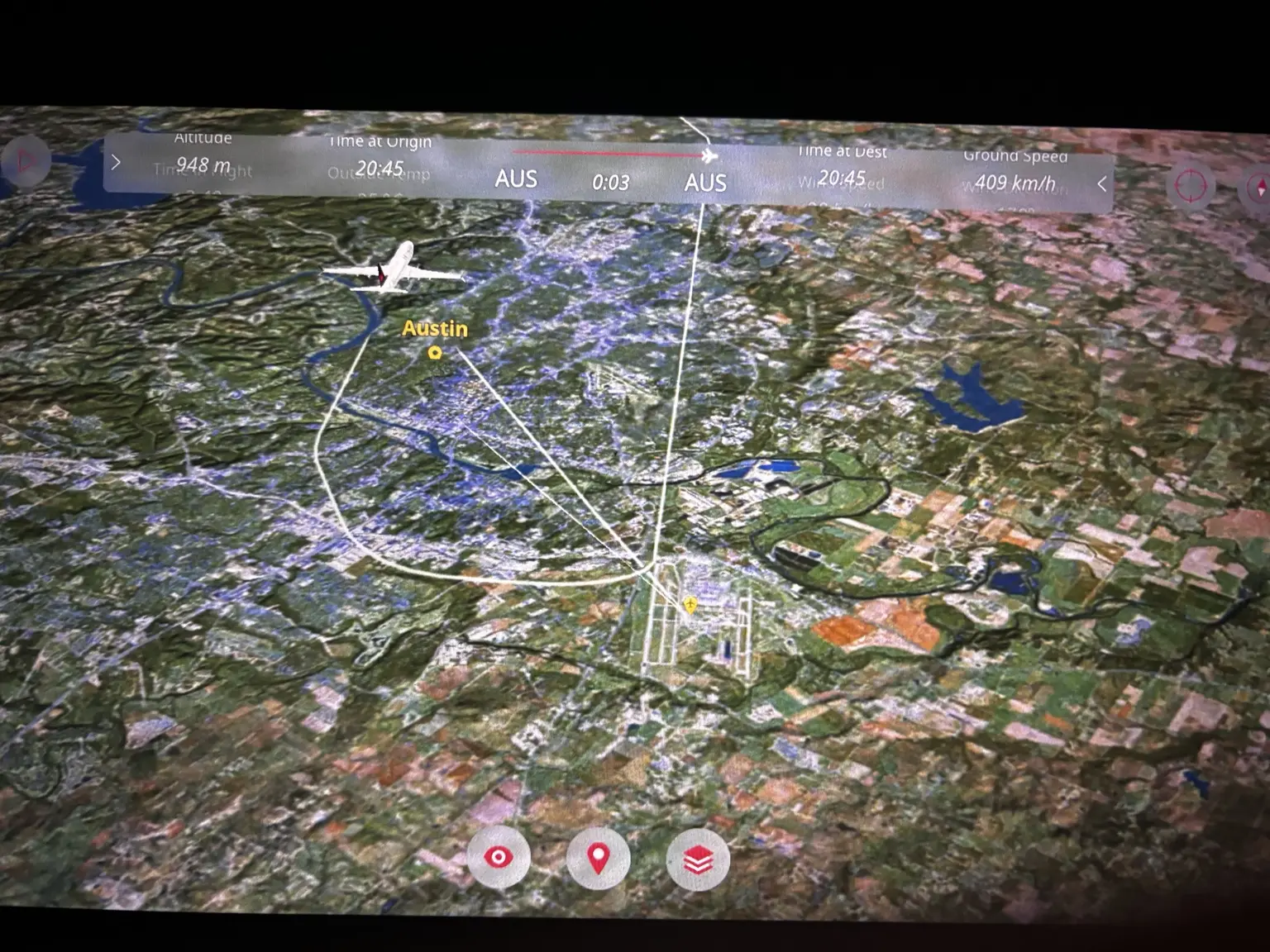
The in-flight map preserved the repeated approach path: the aircraft neared AUS, looped away, and lined up again. The image documents the path, but cannot establish the reason for the go-around by itself.
The Pad Thai was disappointing too—just cheap enough
While waiting at YVR, I ordered a dish labeled Pad Thai Steak.
It did not rescue the journey. The flavor was extremely one-dimensional. The beef had the texture of pre-prepared food and was notably dry. Despite the word steak on the menu, what arrived was crumbled beef rather than anything resembling a whole steak or freshly sliced beef.
Still, it cost C$20, which converted to about US$14.36 when I paid. For airport food, that was cheap enough. It was not good, but it was not expensive enough to justify a full rant. My assessment:
- one-dimensional flavor;
- dry beef that tasted pre-prepared;
- a gap between the word
steakand the actual crumbled meat; - but an acceptable airport price of C$20 / US$14.36;
- disappointing, yet not worth attacking further.
The carbohydrate load, combined with fatigue from the trans-Pacific flight, quickly put me into a food coma. So despite AC1762’s delay and everything that preceded it, I slept through nearly the entire flight.
This was not service recovery by the restaurant, and the Pad Thai did not redeem Air Canada. A mediocre but acceptably priced airport meal simply pushed an already exhausted passenger into sleep.
Landed at 8:51 p.m.; the first bag physically appeared at 9:45
In Austin, Air Canada added one final segment to the story.
My friend ycao was driving to pick me up. The aircraft landed at about 8:51 p.m. Austin time. I immediately told him that we had landed, while warning that I had a checked bag and did not know when I would reach the exit. He noted that a ride from the airport often costs more than $60 and still decided to pick me up.
Our conversation then produced a useful timeline:
| Time | Conversation and actual status |
|---|---|
| 8:51 p.m. | I told ycao that the aircraft had landed and that I had a checked bag. He set out for the airport. |
| 8:52 p.m. | I asked how long airport parking would allow and warned him not to arrive too early because I did not know when my bag would reach the carousel. |
| 8:53 p.m. | ycao estimated that 20 minutes would normally be enough. |
| 8:54 p.m. | I noted that the aircraft had 39 rows and agreed that 20 minutes should, in principle, be enough to deplane. |
| 8:55 p.m. | I suggested that he wait until I was actually inside the terminal before leaving, so he would not sit at the airport unnecessarily. |
| 9:09 p.m. | ycao said he was almost there. I still had not left the aircraft. |
| 9:13 p.m. | I finally exited the aircraft and headed for baggage claim, about 22 minutes after landing. |
| 9:21 p.m. | ycao had reached Door M. |
| 9:22 p.m. | Not a single bag had appeared on the carousel. |
| 9:23 p.m. | Nothing had changed: about 32 minutes after landing, the first bag still had not appeared. |
| 9:26 p.m. | The baggage-hall display showed First Bag, but the belt had not started and no bag had appeared. |
| 9:45 p.m. | The belt finally started and the first physical bag appeared—about 54 minutes after touchdown and 19 minutes after the dashboard claimed First Bag. |
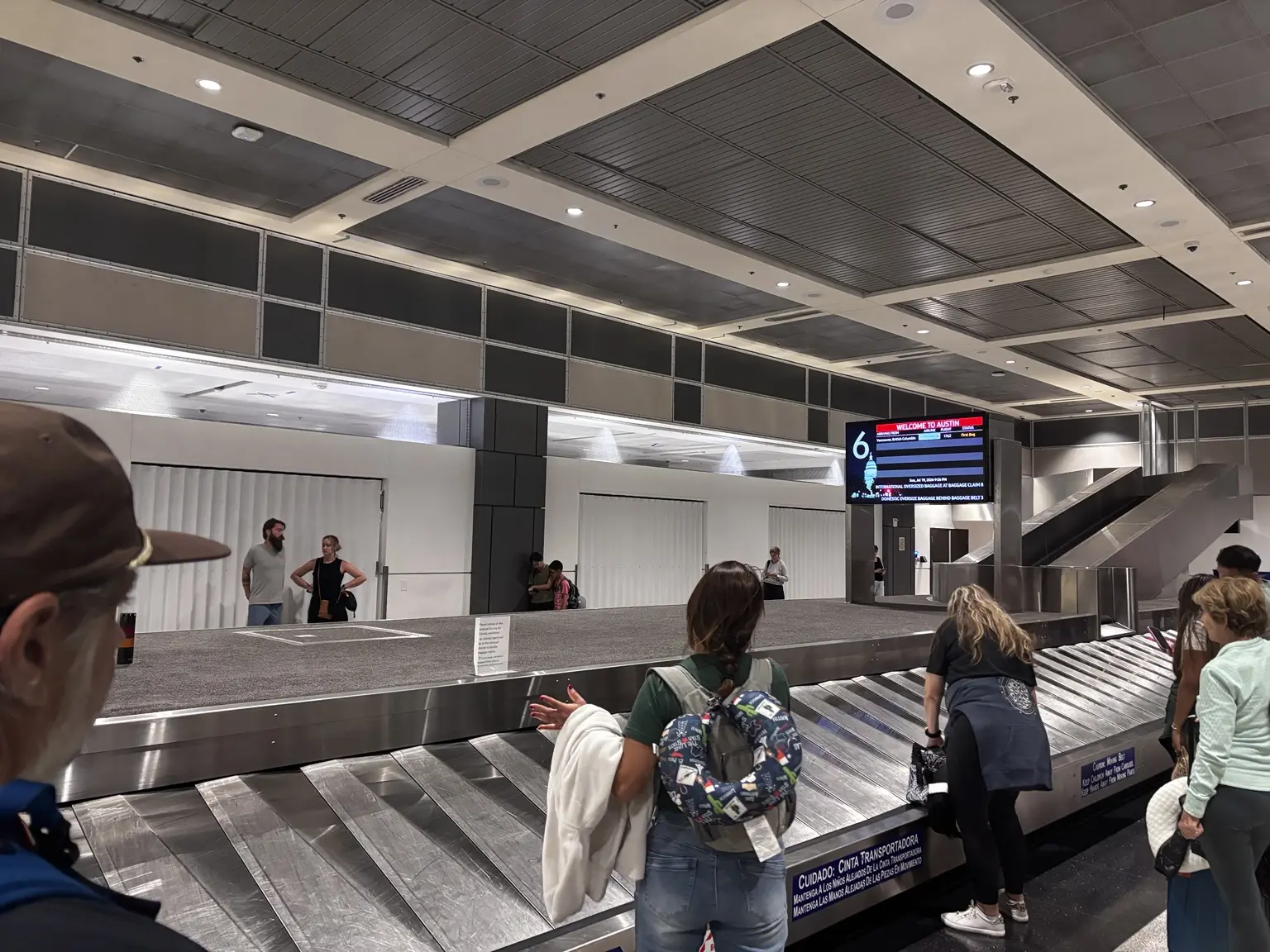
AC1762 passengers had reached Carousel 6, while the belt had yet to begin delivering bags consistently.
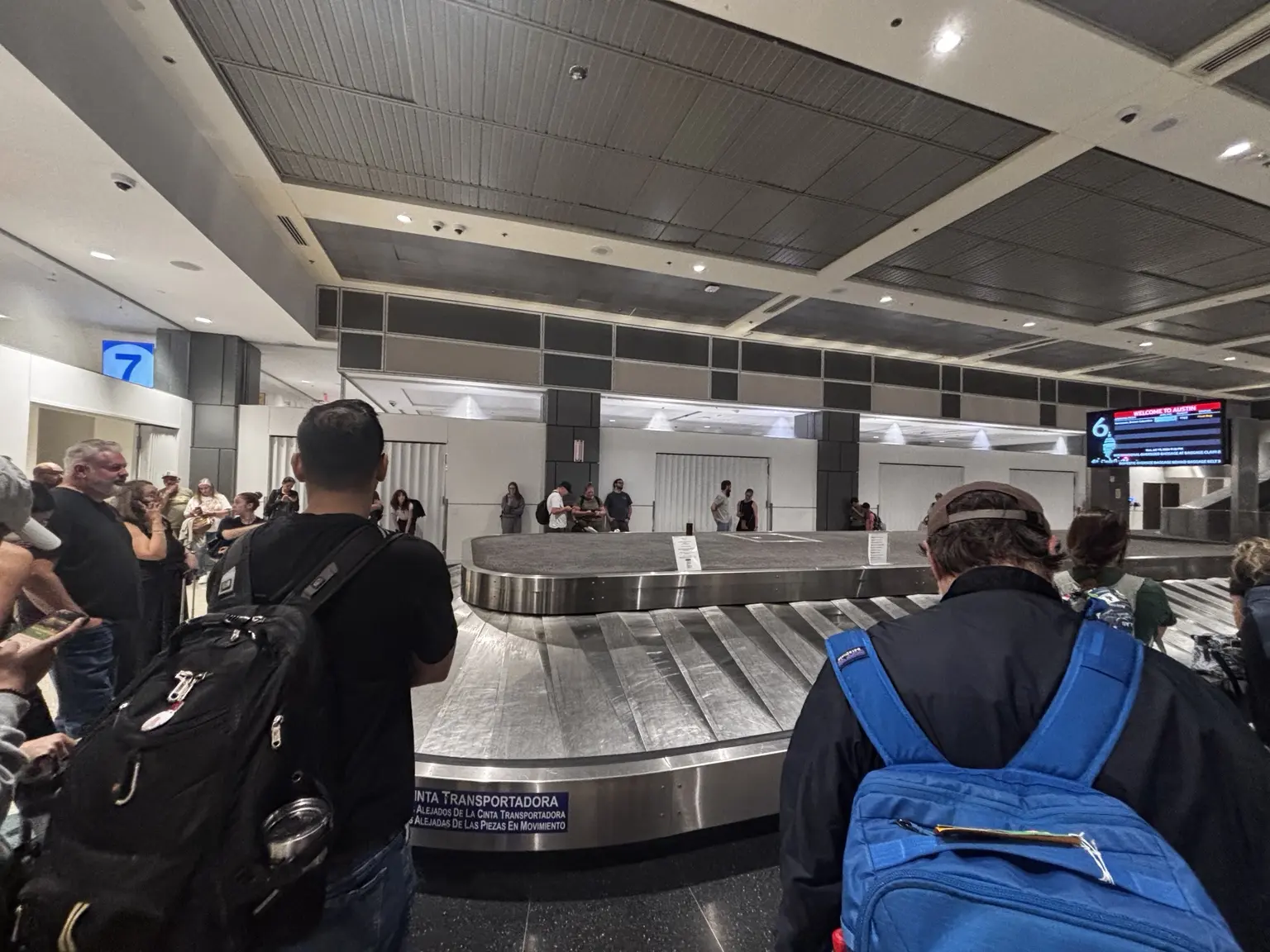
The queue accumulated around the carousel before the bags did.
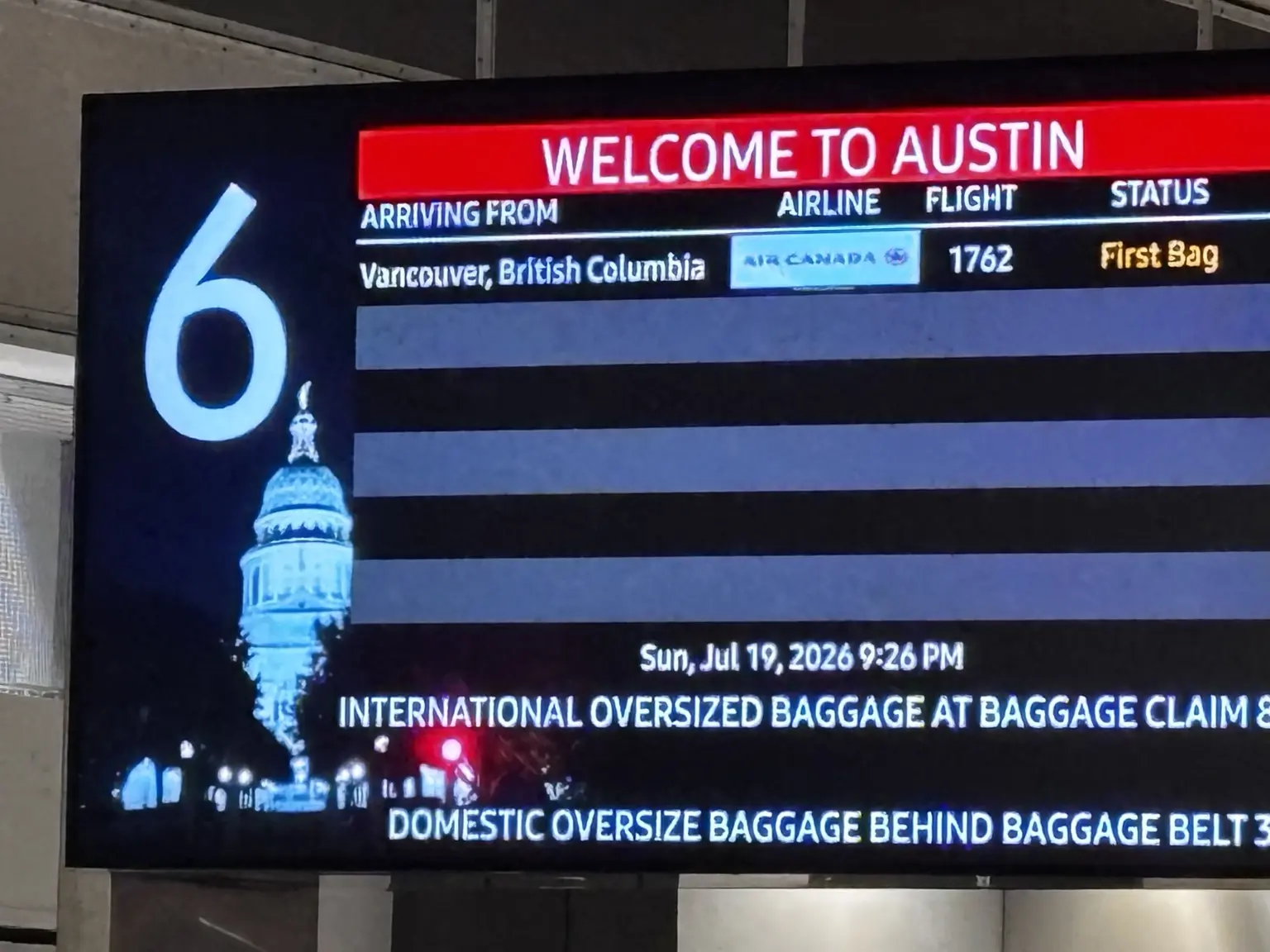
At 9:26 p.m., the display already marked AC1762 as First Bag; this was only a system status. The belt had not started and no bag had appeared.
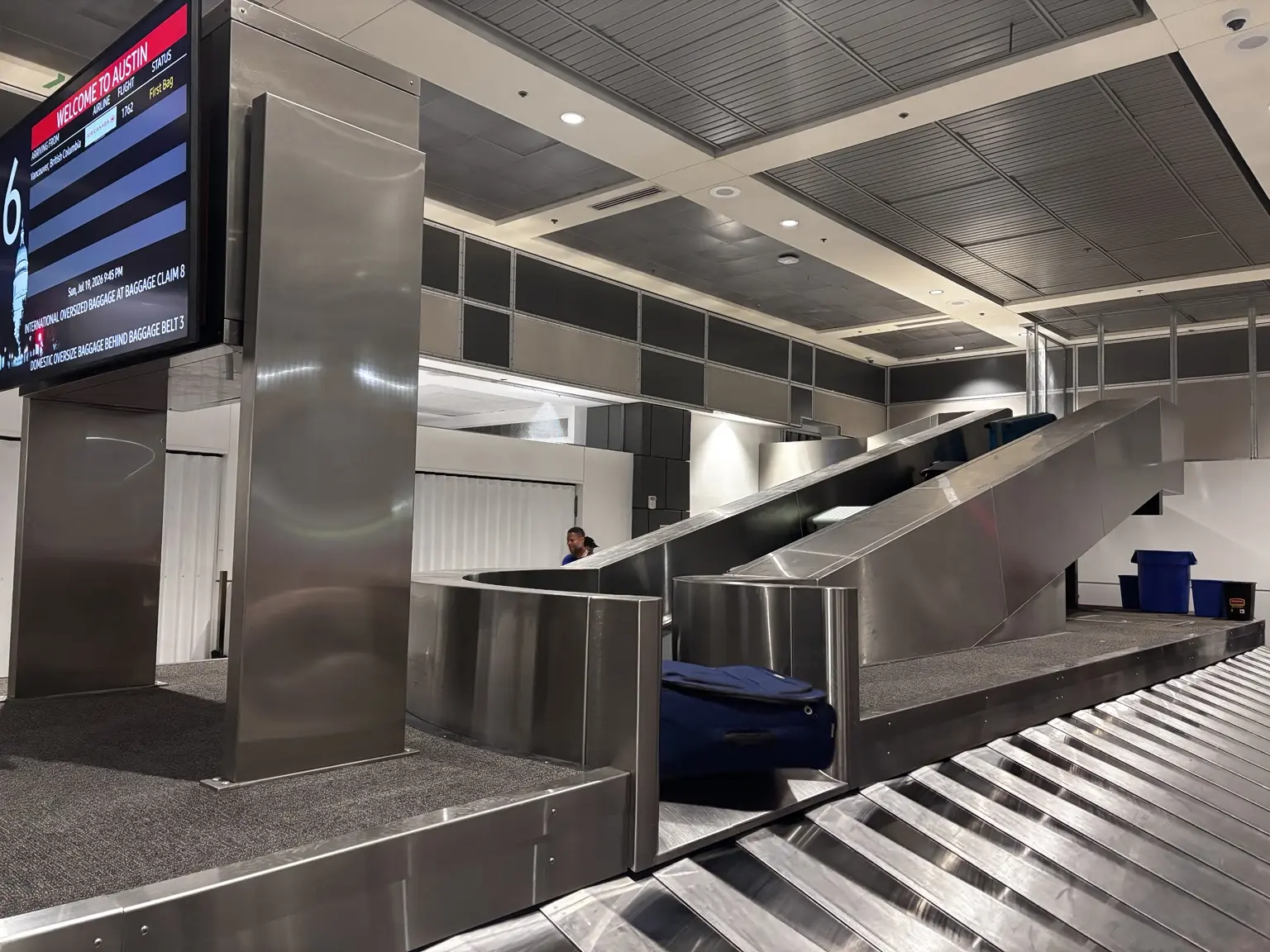
At 9:45 p.m., the belt actually started and the first bag appeared; the display at upper left still read First Bag.
When the carousel finally made its startup sound, waiting passengers applauded and whistled. They were not celebrating a service achievement. The collective reaction was a sarcastic response to a wait that had finally ended. An ordinary baggage belt received the reaction of a show beginning, which was itself the clearest on-site review of the delay.
More importantly, the dashboard and physical reality differed by 19 minutes. The dashboard claimed First Bag at 9:26, while the first actual bag did not emerge until 9:45. An observer reading only the system record would conclude that delivery had begun; passengers at the carousel were still looking at a motionless belt.
This timeline says more than “baggage was a little slow.” My friend left home, drove to the airport, reached Door M, and then waited more than twenty additional minutes before Air Canada delivered the first bag to the carousel. ycao’s original 20-minute estimate barely covered the time from touchdown to my exit from the aircraft; it did not begin to cover checked-baggage delivery.
For passengers, a flight marked “arrived” does not mean the journey has ended. Taxiing, reaching the gate, opening the door, unloading 39 rows of passengers, walking to baggage claim, and waiting for ground crews to unload and route bags can each consume more time. 8:51 p.m. was the aircraft’s touchdown time, not the time when I could leave the airport.
Those 54 minutes before the first physical bag appeared were especially conspicuous after a go-around, towing, and delay. Even after the aircraft finally reached Austin, passengers still had to wait for the door, deplaning, and a baggage system that had not begun producing bags. Air Canada turned the last mile into another queue.
Not a disaster, but a chain of avoidable friction
I completed the SIN → YVR → AUS journey. The go-around reflected a safety-first decision, and the delay did not destroy the trip. The empty row on AC20 even gave me unusually good economy-class sleep.
But an airline should not be judged only by whether passengers eventually arrive. We should also ask:
- Can the cabin control odor near the lavatories?
- Is the flight turnaround stable?
- Are aircraft, gates, tow crews, and equipment coordinated on time?
- Do delay notices provide explanations passengers can understand?
- Do small failures keep stacking up until they drain passengers’ energy and trust?
No single issue on this trip was a disaster. The problem was the chain: fourteen hours of lavatory odor, a confusing YVR transfer, a weak recent on-time sample, a go-around, towing, delay, and a dashboard that claimed First Bag 19 minutes before the first physical bag appeared, 54 minutes after touchdown.
In the end, luck gave me a row. I ate a disappointing but cheap-enough Pad Thai, then slept through the next flight under the combined weight of carbohydrates and exhaustion. Air Canada completed the transportation. It did not deliver an experience I would trust.
The Full Set: My Final Verdict on Air Canada
Air Canada is the worst airline I have flown, bar none. 🤣
It locked my Aeroplan frequent-flyer account for no apparent reason. It also kept me on the phone for an hour without producing an available agent. It delayed departure by an hour and arrival by half an hour. Of the six recent flights I found in a 30-day sample, only three were on time. It gave me the first go-around of my life, fourteen hours beside a lavatory odor, and a baggage carousel that did not produce its first bag until roughly 54 minutes after landing. That completes the set.
P.S. The food on SIN → YVR was decent, and the U.S. preclearance experience at YVR was generally fine.
I recorded the other parts of this YVR transfer in two related posts:
- How I “Reasonably” Ended Up in the Wrong NEXUS Line at YVR
- Another Side of Vancouver Airport: Age, Workspace, and the People I Saw
Language: