Stop Saying Chinese People Have No Voice
Published:
Author: Koutian Wu; GitHub: ktwu01
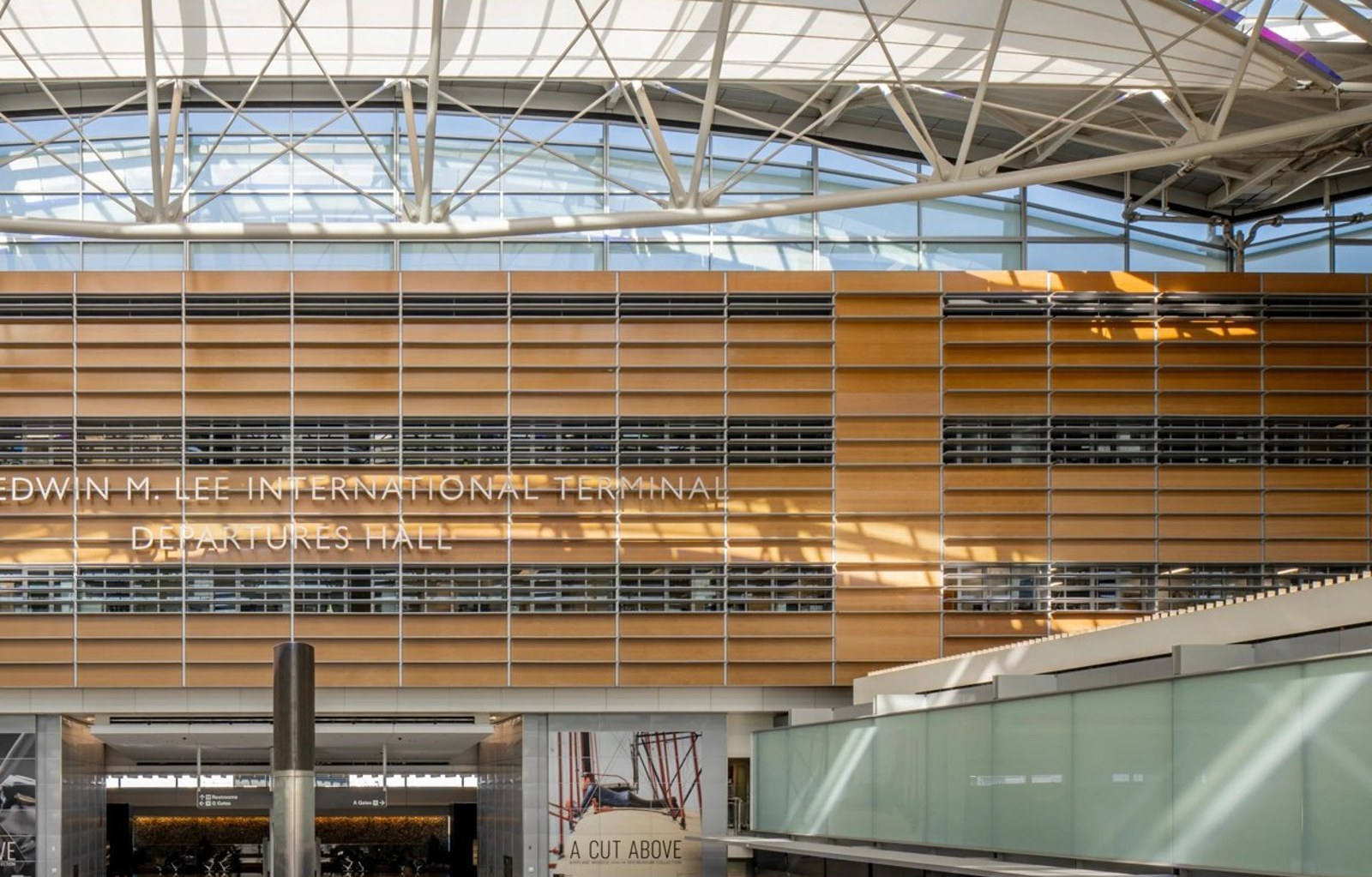
On February 14 I landed at San Francisco International Airport, seeing someone off on a flight home to China, and I looked up at the name over the International Terminal Departures Hall, Mayor Edwin M. Lee International Terminal Departures Hall. Lee. Ed Lee. A Chinese name, hanging over the international terminal of a world class airport.
Do you know what my first reaction was? My first reaction was to check whether I had read it wrong. In everything I had absorbed growing up, honors at this level basically never had anything to do with Chinese people.
I had not read it wrong. In 2019 San Francisco formally decided to name that departures hall, the hall that faces the whole world, for the city’s first elected Chinese American mayor, and it was dedicated on November 13.
I want to use this story to take apart a question many people never think through. Where does a group’s voice actually come from?
Inside the Chinese community there is a very common complaint. We have no voice. Is that true? Half true. The more accurate sentence is this. We do not yet have enough people willing to go and win a voice.
Ed Lee’s story is the perfect case. He was not born with a silver spoon. The child of immigrants from Taishan, Guangdong, his father worked as a cook, his mother as a seamstress and waitress, and six children grew up in Seattle public housing. He also never took the tracks Chinese families traditionally worship. No Wall Street, no Silicon Valley, no medical school. He chose a road almost nobody in the Chinese community walks, civil rights law, then public administration, then running a city.
What makes that road hard is that every step he took had almost no reference point inside his own community. No elder could tell him how to walk it. No ready made Chinese network handed him resources and connections. He had to build trust himself, and prove himself, himself.
But because he walked that road, San Francisco’s Chinese community gained a level of political visibility in those years that it had never had before. He pushed affordable housing construction, he pushed San Francisco’s hosting around Super Bowl 50, and the city went through a period of remarkable economic growth on his watch.
What did those results finally turn into? They turned into a name on an airport terminal. More importantly, they turned into a signal. Chinese people can occupy core positions in American public life.
Now let me pull this logic back to us, the students.
I have noticed something. When most Chinese students choose a career track, they run it through a very narrow filter. Can this job sponsor my status, does it pay well, is it stable. Run those three conditions and basically three roads survive, tech, finance and medicine.
Does that filter make sense? Of course it does. But here is the problem. If the best minds of an entire community crowd into three tracks, then every other track has no Chinese voice on it. No Chinese voice means no one representing Chinese interests. And with no one representing those interests, you complain forever that we have no voice.
It is a closed loop. The way to break a closed loop is for somebody to walk a different road.
I am not telling everyone to go into politics. I am pointing at a deeper logic. A group’s influence is not decided by the richest person inside that group. It is decided by how many fields that group covers.
Why do Jewish Americans hold so much influence in this country? Not only because some of them are wealthy. It is because at the top level of finance, media, law, academia, politics, entertainment and technology, every single one of those fields, you can find Jewish Americans there. Their coverage is wide enough, so their voice is loud enough.
What Chinese people lack right now is not the ability to break through at a single point. What we lack is the instinct to spread out across the whole map.
One Ed Lee cannot change the whole picture, of course. But his existence proves one thing. This road goes through. The name on that international terminal is less an endpoint and more a door. It is telling the people behind him, you can walk in.
So what is my actual suggestion? I am not asking you to change careers, and I am not asking you to give up your plan. When you make your choices, widen your filter a little. Next to the question of what this does for me personally, add one more question. Is there a Chinese person in this position? If there is not, could I be the first?
You do not need an airport named after you. You only need to occupy one more position, in your industry, in your community, in your circle. A hundred people each occupying one more position adds up to a hundred places that had no Chinese voice yesterday, and have one today.
That is where a voice comes from. Complaining will never earn you one. Taking positions will.