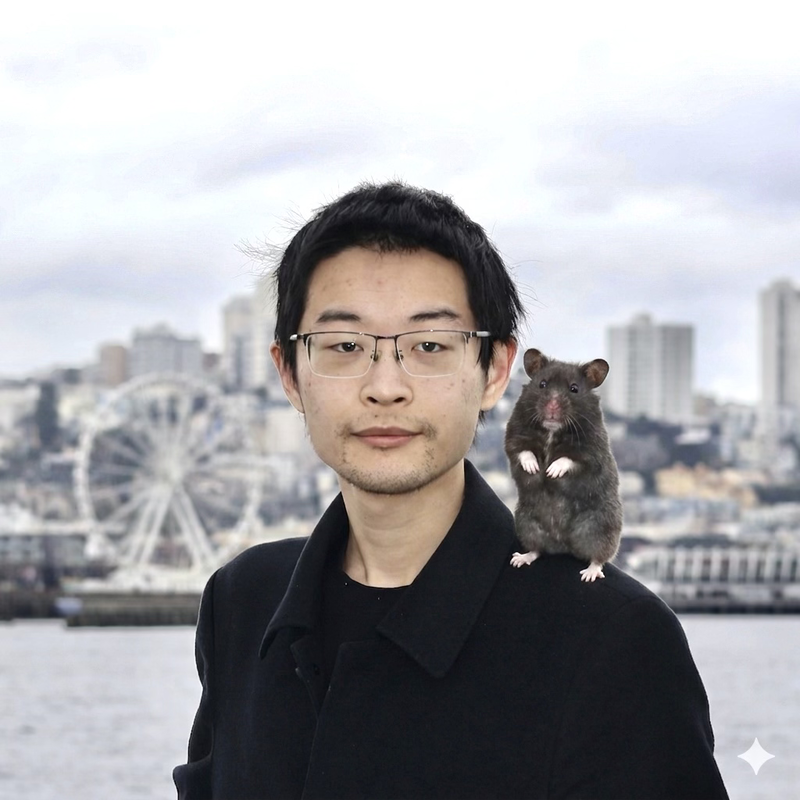
Marc Hesse Does the Fluid Mechanics of Everything From Magma to Mars
Published:
You can study fluid mechanics in five different countries before you turn 30, work on petroleum reservoirs and tectonophysics and planetary ice on the same week, and somehow end up at a Centennial Chair in Geophysics. Marc Hesse did exactly that, and the through-line is more interesting than any of the individual stops.
Author: Koutian Wu; GitHub: ktwu01
Marc’s chronicle: ut01.github.io/marc-hesse-chronicle. It is one of a directory of chronicles forked from the Sean Xiang chronicle template, all built by UT Austin colleagues and me. The full directory: Ashley Matheny, Chen Ning Yang, Daniella Rempe, Eric C. Greene, Geeta Persad, Gengchen Mai, Juan Santiago, Kehan Dong, Marc Hesse, Sean Xiang, Zong-Liang Yang.
Marc started his geology studies at the Technical University of Munich. He then did a BSc in Geology at the University of Edinburgh, finishing around 1999-2000, picking up the Edinburgh Geological Society Prize, the Mineralogical Society Student Award, and the Total Oil Marine Prize along the way. From Edinburgh he went into the MIT-WHOI Joint Program for an MS in Oceanography from 2000 to 2002, on a Presidential Graduate Fellowship at MIT. From there to the University of Cambridge, DAMTP specifically, for an MPhil in Fluid Flow under the European Trust Bursary and an EPSRC Studentship, finishing in 2003. Then to Stanford for the PhD in Petroleum Engineering in the Department of Energy Resources Engineering, roughly 2003 to 2008. He picked up a David Crighton Fellowship in 2009. Postdoc at Brown in Tectonophysics, 2008-2009. He joined UT Austin in Fall 2009 as Assistant Professor at the Jackson School of Geosciences, with a concurrent appointment at what is now the Oden Institute. He won the Jackson Centennial Teaching Fellowship in 2011 and the Shell Companies Foundation Centennial Chair in Geophysics in 2012.
If you read that as a list of jobs, it looks like someone who could not decide what to study. If you read it as a curriculum, it looks like someone who deliberately collected the mathematical and physical tools to do fluid mechanics in any geoscience setting. Munich for the German rigor. Edinburgh for the hard rock geology. MIT-WHOI for ocean dynamics. Cambridge DAMTP for the applied mathematics. Stanford petroleum engineering for the multiphase flow in porous media. Brown for tectonics. By the time he started his own group at UT Austin he could pick which fluid mechanics problem mattered, regardless of the surface domain.
His Geological Fluid Mechanics Group at the Oden Institute reflects that breadth. The group works on porous media flow with applications spanning groundwater, magma transport, ice sheet dynamics, and CO2 sequestration. The mathematics is the constant. The physical setting changes.
The reason this matters to me, sitting two buildings over in the Earth and Planetary Sciences department, is that almost everything in land surface modeling reduces to multiphase flow in porous media if you squint. Soil moisture is multiphase flow. Plant water uptake is multiphase flow with a biological boundary condition. Snow processes involve phase change in porous media. Bedrock weathering involves reactive transport in fractured porous media. The fluid mechanics community sometimes solves these problems at a level of mathematical care that the land surface modeling community has not always matched, and there is real research leverage in moving ideas across that boundary.
Marc’s appointment at the Oden Institute is the structural piece that makes this possible at UT Austin. Oden is one of the few places in the world that takes computational science seriously as its own discipline rather than as a service department. When you have a faculty member with one foot in geosciences and one foot in computational mathematics, you get a different class of student, a different set of conferences, a different default level of numerical rigor.
I am going to admit, when I was applying to PhD programs, the existence of Marc and the Oden Institute was one of the things that pulled me toward UT Austin specifically. The math and computation infrastructure here is not bolted on. It is part of how the Earth sciences are done.
There is something else I notice about how he runs his group. The teaching award in 2011 was not an accident. From talking to people who have taken his classes, the man can actually explain a Stokes equation. That is rarer than it should be. A lot of fluid mechanics teaching at the graduate level is essentially a competition to see who can derive the most opaque equation the fastest. Marc is in the camp that thinks if you cannot draw the physical picture before you write the math, you do not actually understand the equation.
For my own PhD, the practical takeaway is that when I am thinking about how water moves through a soil column inside Noah-MP, I should not be afraid to walk over to the Oden Institute and ask whether the porous-media formulation we are using is the one a fluid mechanics person would write. The answer might be no. That answer would be useful.
The career-shape lesson is the one I keep coming back to. Five countries, five sub-disciplines, one consistent toolkit. If you are early in your career and you are panicking about specialization, Marc’s trajectory is a counter-example. Specialization is overrated. What matters is whether the tools you collect are the ones that compose into something coherent later.