
$2,170 a Month, and You Can Rent a Human Brain
Published:
Your next cloud instance is alive, it needs to be fed every three days, and it will be dead in six months whether you cancel or not.
Author: Koutian Wu; GitHub: ktwu01
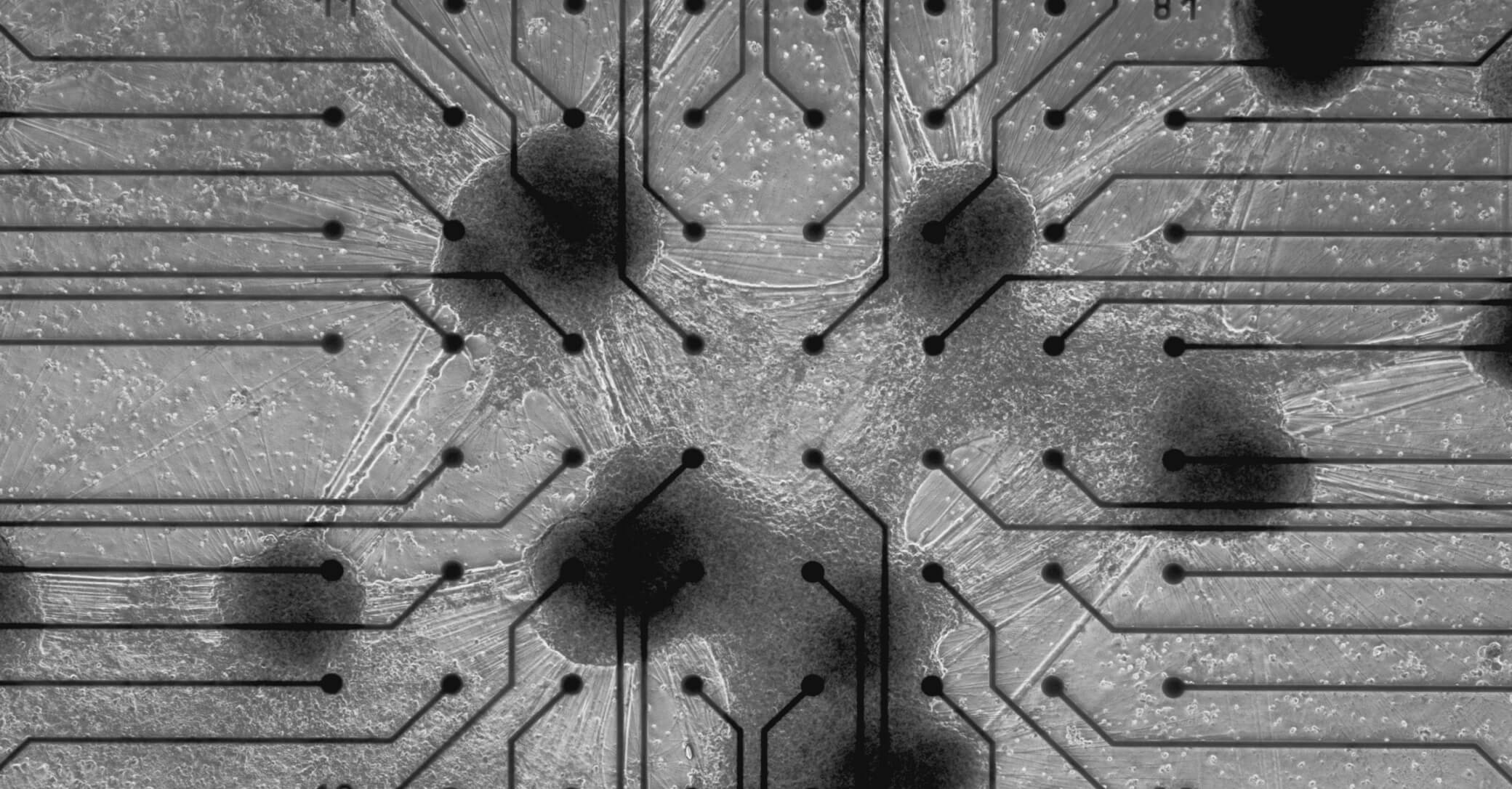
Cortical Labs, a company from Melbourne, Australia, grows living human neurons from stem cells, lays them across a silicon chip covered in electrodes, keeps them alive in a temperature controlled box, and rents access to them over the internet. The product is called the CL1. The rental service is called Cortical Cloud. It costs about 2,170 dollars a month per unit, it comes with a Python API, and the checkout page looks like any other cloud pricing page, which is exactly what makes it unsettling.
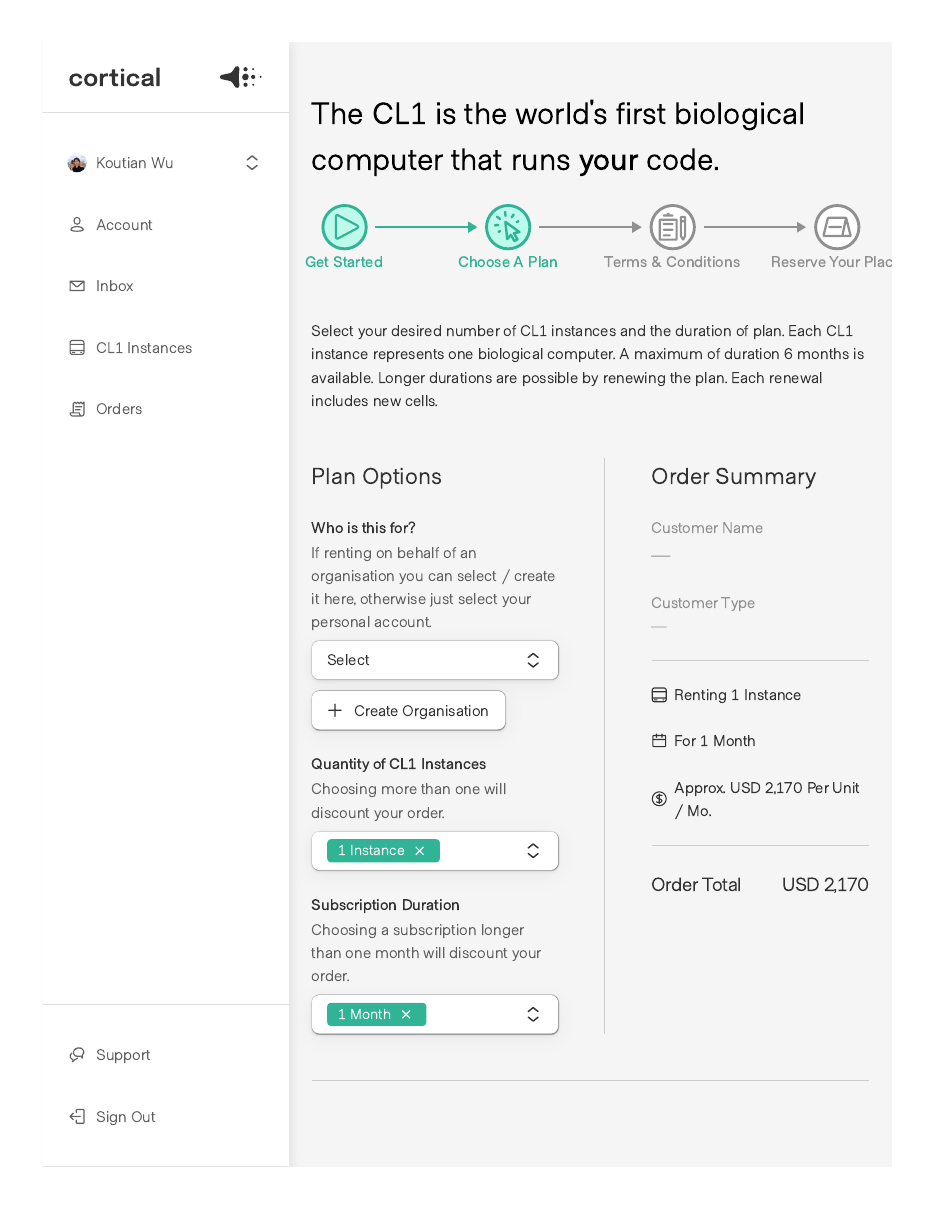
The pricing even behaves like cloud pricing. Rent longer and the brain gets cheaper per month: 1,905 dollars a month on a two month plan, down to 1,728 a month if you commit to six. And because the cells die, every renewal includes new cells, fresh neurons shipped like a hardware refresh. This is the same lab that taught a dish of neurons to play Pong in 2022 and later set them on Doom. The cells were never programmed with the rules of those games. They received signals, they fired back, and they adapted. That is not computation in the way a GPU computes. That is the beginning of learning, grown in a dish.
The business case is energy, and it deserves to be taken seriously.
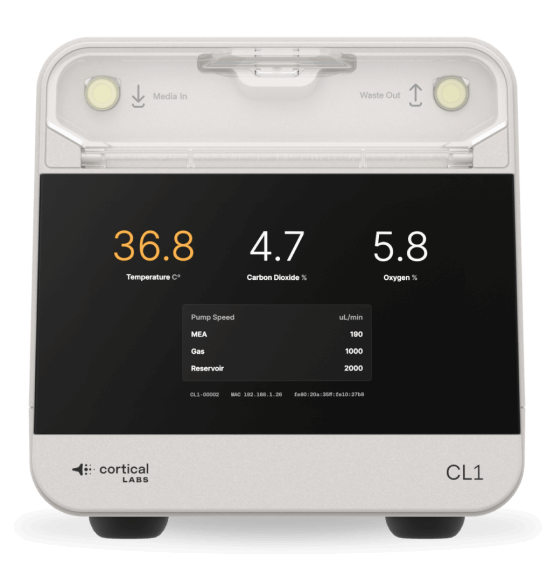 Each CL1 holds on the order of 800,000 neurons and draws roughly 25 watts. A serious AI chip draws twenty times that before you count the cooling. The human brain runs an entire person on about 20 watts, while a data center needs its own power plant, and the gap between those two numbers is the whole ballgame for AI right now. Every major lab is bottlenecked on electricity, land, and cooling. Biology solved this problem over evolutionary time scales, at room temperature, on sugar water. In August this year, Singapore switched on a rack of twenty CL1 units at a medical school, the first server rack in history whose hardware is alive. If biological computing works at even a fraction of the promised efficiency, the economics of intelligence change completely, and intelligence is the input to everything else.
Now the analysis nobody in the launch coverage wanted to do. A neuron culture is not a machine that happens to be wet. It is human tissue, grown from human cells, doing the one thing we have always said makes us special, which is processing information in a way that adapts. Today it is 800,000 cells with no body, no senses, and no continuity, and every serious scientist involved will tell you it cannot suffer, and they are probably right. But the trajectory matters more than the snapshot. The same pricing page that sells you one unit will happily sell you a rack. The unit count scales. The cultures get bigger, denser, and longer lived. Somewhere between a dish that plays Pong and a system a hospital trusts with drug discovery, there is a line where the word “hardware” stops being honest. We have no institution whose job is to find that line. Drug regulators review drugs. Cloud providers review nothing. The ethics review for this product was a checkout flow.
The deeper problem is that the market will not wait for the philosophy. Wetware as a service turns neurons into a commodity with a monthly price, an uptime expectation, and an end of life policy, and commodities get optimized. The optimization pressure on living compute is unlike anything in silicon. You breed for performance. You select the cultures that fire the way you want. You are, slowly and with excellent quarterly reasons, doing directed evolution on human neural tissue for benchmark scores. Every step is defensible. The sum is a direction nobody chose.
I do not think this should be banned. The potential upside, in drug discovery, in energy, in understanding the brain itself, is enormous, and the current systems are almost certainly not conscious in any meaningful sense. But I think we should be honest that a threshold has been crossed quietly. For eighty years we tried to make computers that think like brains, and the field just quietly gave up and started renting the brain itself. AWS rents you silicon by the hour. Cortical Labs rents you a living brain by the month, at cloud.corticallabs.com, and the page takes a credit card. The future did not arrive with a bang. It arrived with a pricing table.