Easy to Let Out, Hard to Take Back: Five Stills From The Mad Phoenix
Published:
Most people walk away from The Mad Phoenix quoting the genius playwright’s pride or his descent into madness; on May 10, 2021, all five screenshots I saved came from his father talking about love in a dim room.
Author: Koutian Wu; GitHub: ktwu01
The Mad Phoenix (Nanhai Shisanlang, 1997) traces the rise and tragic fall of the real-life Cantonese opera playwright Kong Yue-kau. The film is packed with dazzling stage banter, wartime heartbreak, and sharp lines about talent and integrity. Yet the scene that made my younger self hit pause five times in a row is a quiet conversation between young Thirteen and his father, Kong Yu-kau.
Paying every debt in full
In the first three frames, the father explains his notoriously large household—dozens of children and a long line of wives. From the outside, it looks like the indulgence of a wealthy Qing-era scholar. Sitting in the half-darkness with his son, he tells a very different story: “I pay equal love to all my wives. I am responsible to all women. That’s why, I have so much burden in my life!”
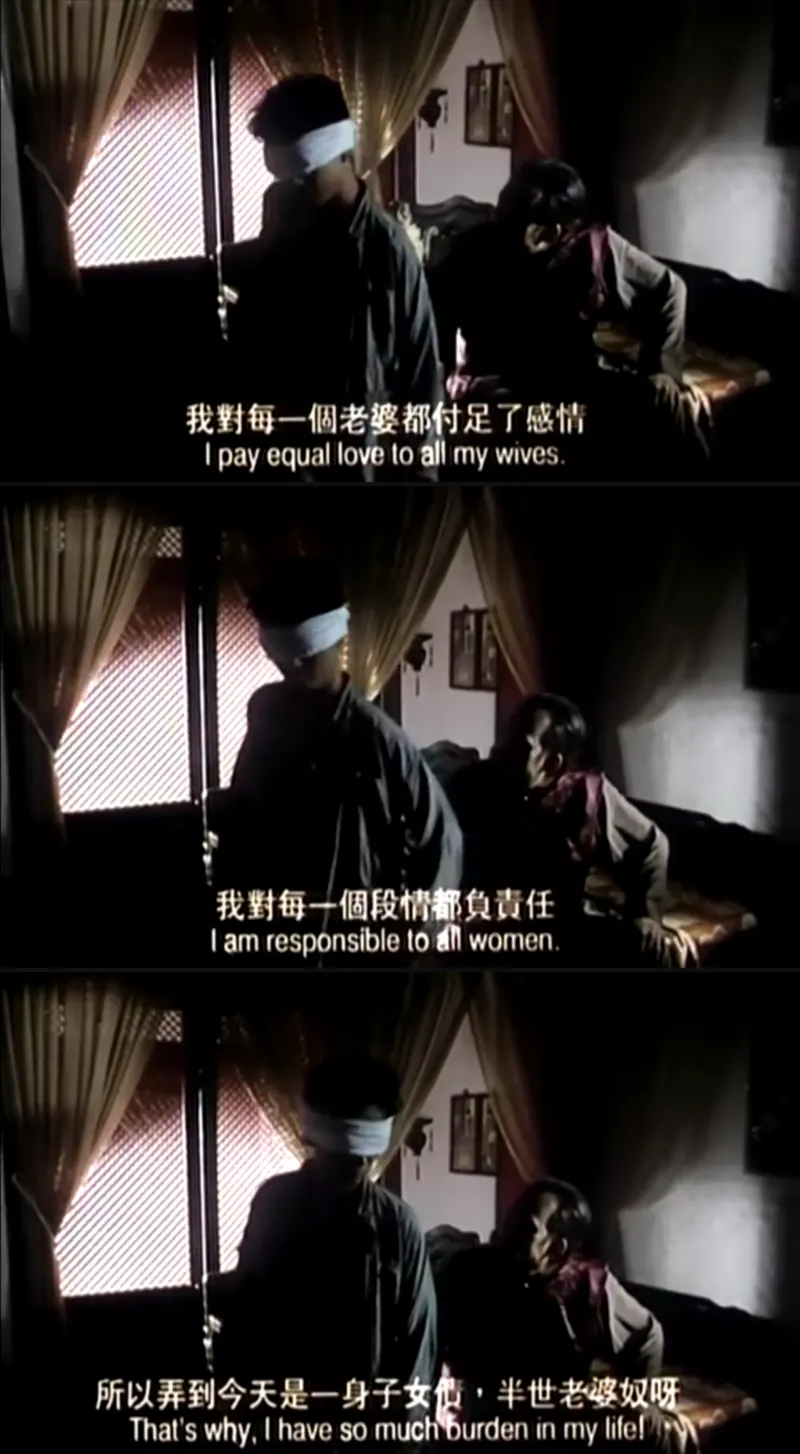
He calls himself a lifelong servant to his wives and children—not with bitterness, more with the weary amusement of someone who never learned how to walk away cleanly.
Easy to start, hard to stop
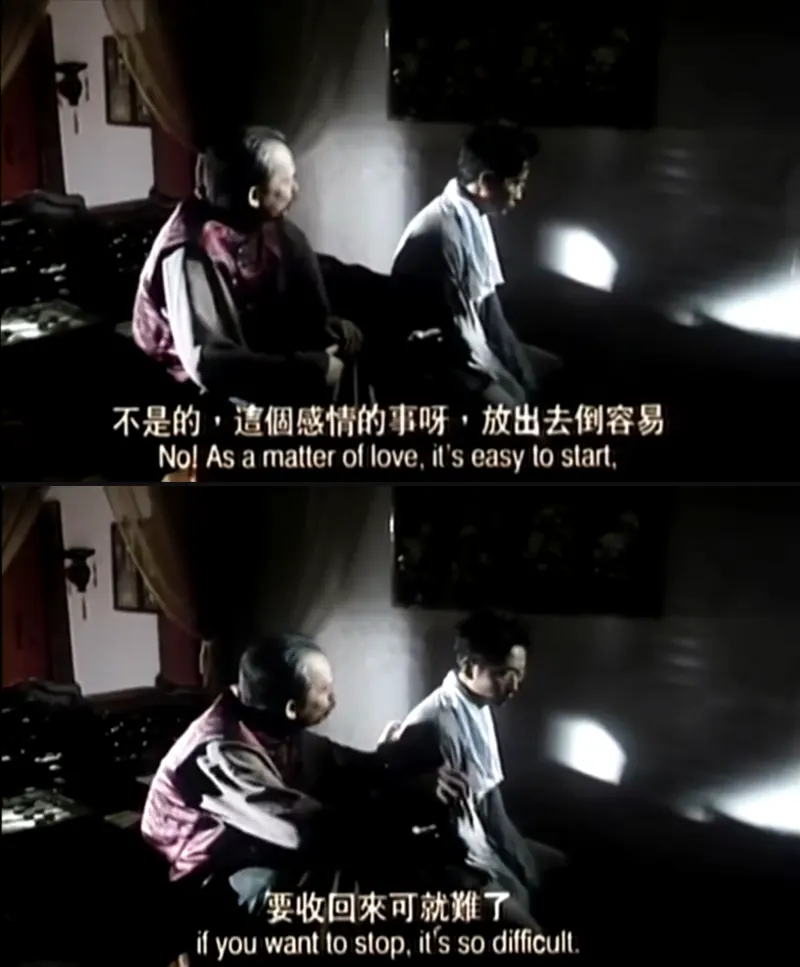
Then comes the two-line turn that explains why I kept screenshotting every beat of that monologue: “No! As a matter of love, it’s easy to start; if you want to stop, it’s so difficult.”
In Cantonese and Chinese, the wording lands with much heavier weight: 这个感情的事呀,放出去倒容易,要收回来可就难了—affection is easy to let out, and terribly hard to pull back in.
What makes that exchange haunt the rest of the film is how clearly it foreshadows the son’s own life. Thirteen laughs off his father’s domestic burdens, then goes on to pour his entire soul into one unrequited love and into Cantonese opera itself—and proves incapable of ever pulling either one back. Five years after saving these five frames, the father’s line sounds even truer than it did at eighteen.