Nineteen Stills From Casablanca
Published:
On March 21, 2021, I finished Casablanca and did not write a single word of commentary—just nineteen paused frames pasted into a Word document.
Author: Koutian Wu; GitHub: ktwu01
Opening that file five years later feels like reading a map of what caught my eye at eighteen. Every screenshot lands on a line of dialogue, and when you line them back up in chronological order—in the original document they were pasted newest first—the whole film replays in six beats.
Paris, before the questions started
In the Paris flashbacks, Rick and Ilsa keep the rules simple: no past, no questions, champagne while the German army moves closer. The frames I saved are the toast (“Here’s looking at you, kid.”) and the quiet disbelief of falling in love right as Europe falls apart (“With the whole world crumbling, we pick this time to fall in love.”).
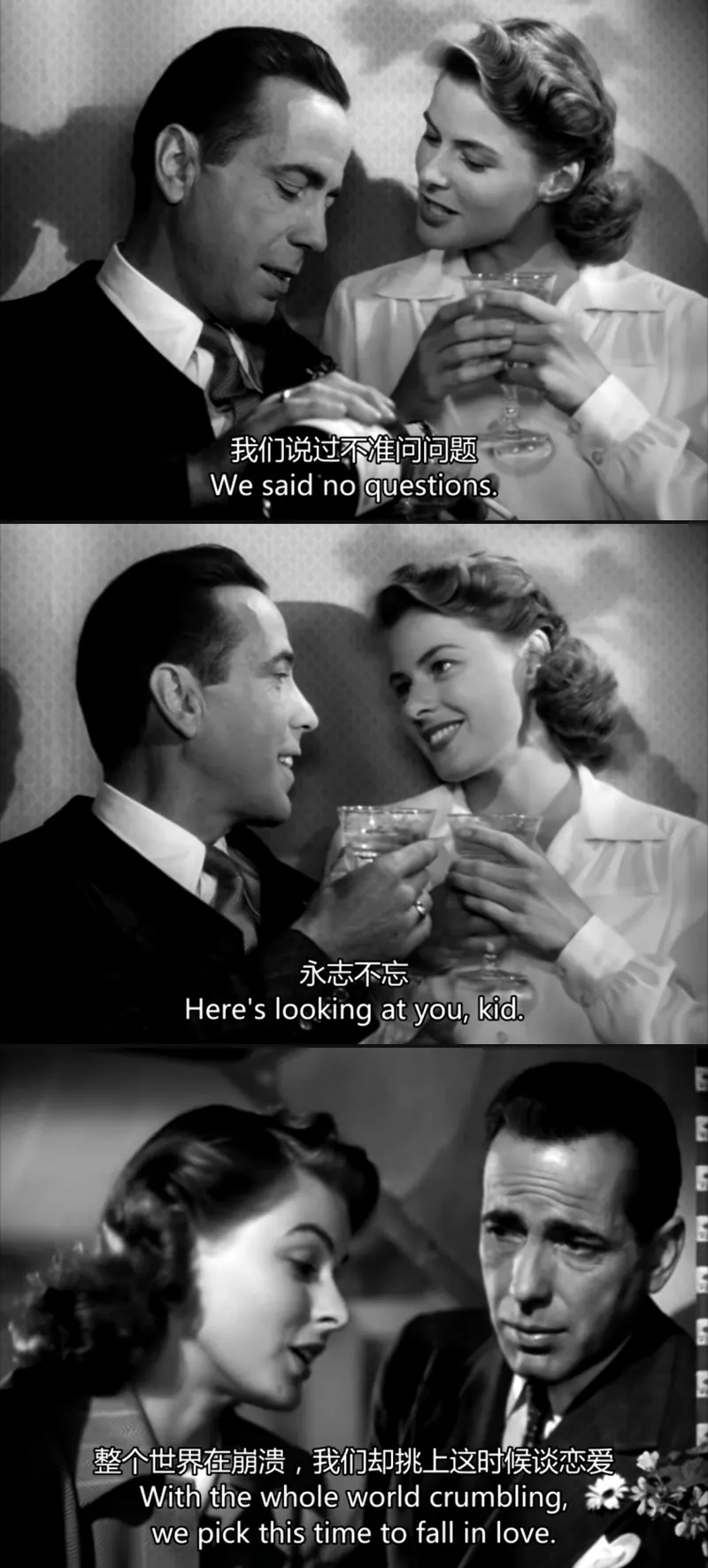
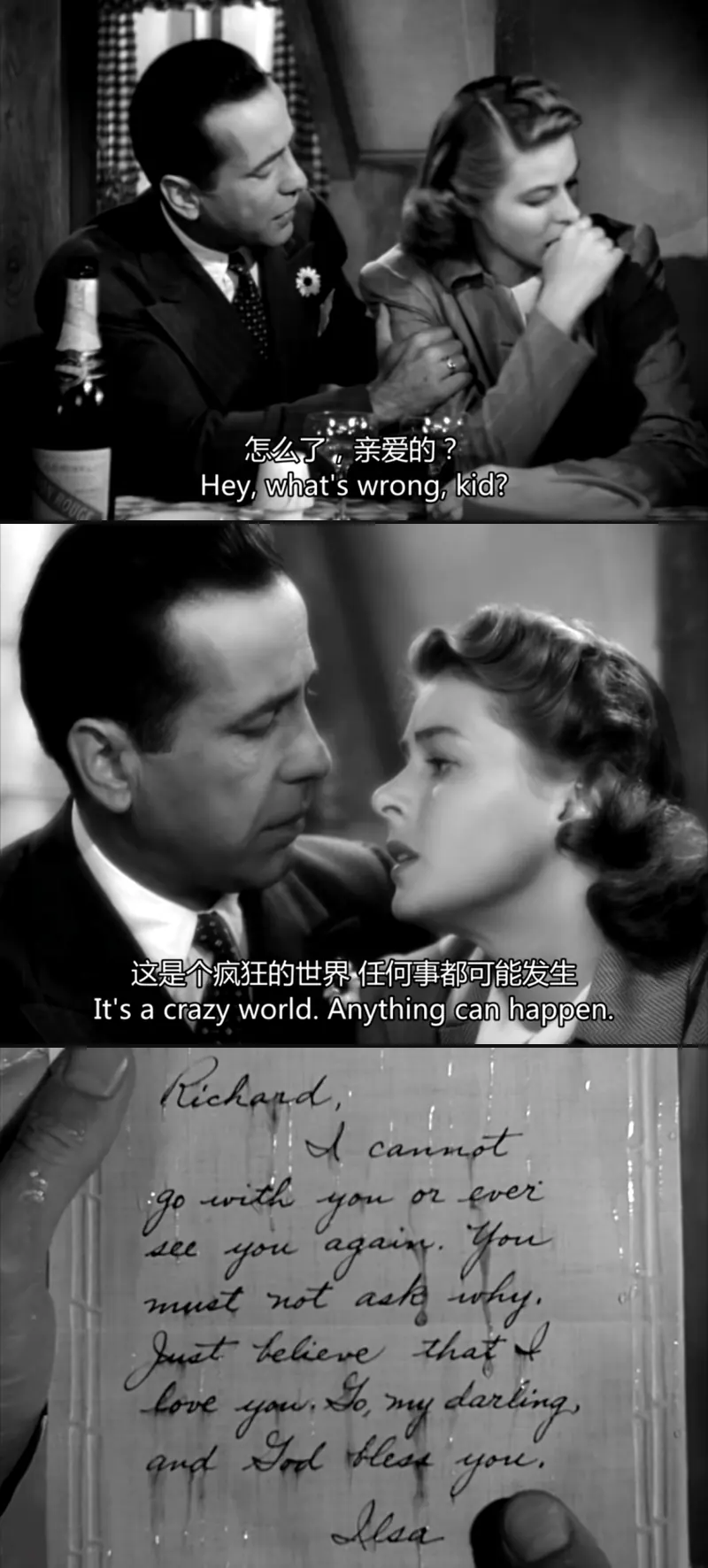
Then the mood breaks in a single shot. Ilsa already knows her husband Victor Laszlo is alive, and she cannot tell Rick why she is crying. A few minutes later comes the rain-streaked note at the train station: “Richard, I cannot go with you or ever see you again. You must not ask why. Just believe that I love you.” Out of an entire two-hour movie, I stopped to screenshot a handwritten piece of paper getting soaked in the rain.
The story she told herself
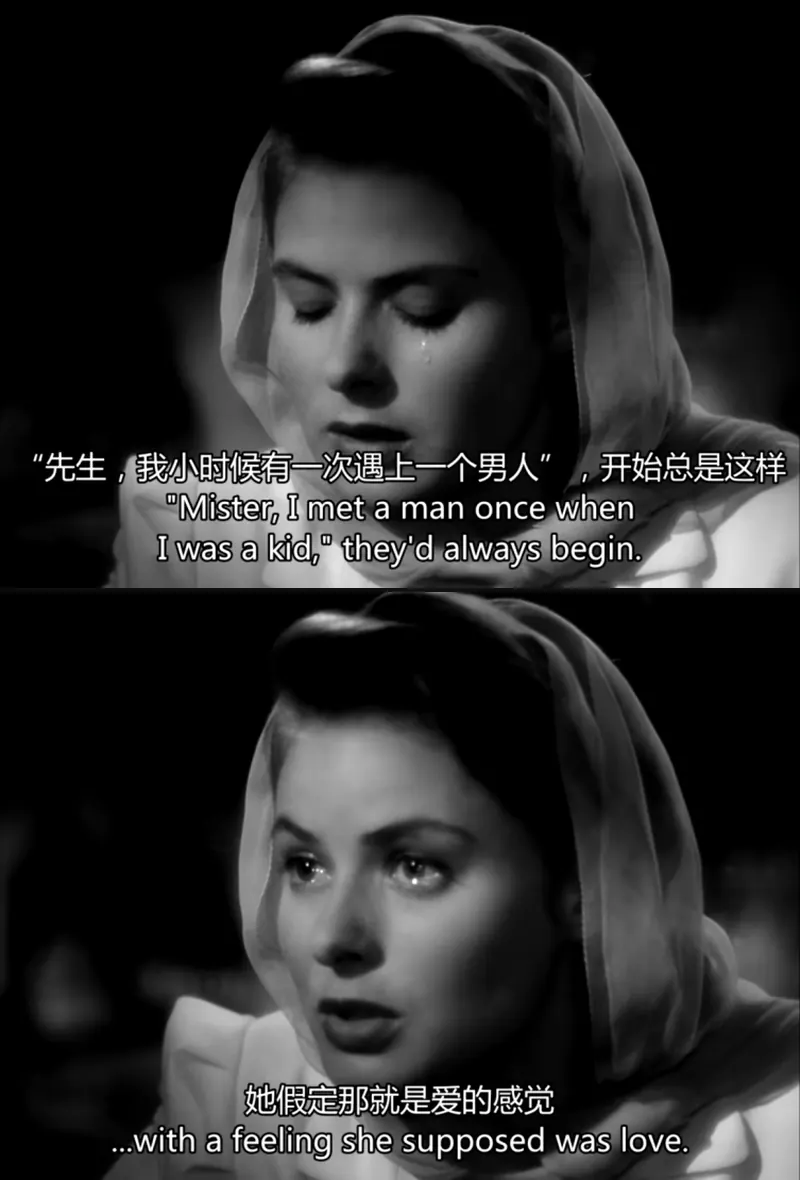
Back in Casablanca, Ilsa finally explains how she met Laszlo when she was still young, mistaking admiration and devotion for the whole of love. Looking at these two frames now, Ingrid Bergman’s face does almost all the work; the subtitles barely need to be there.
Why Laszlo matters in the triangle
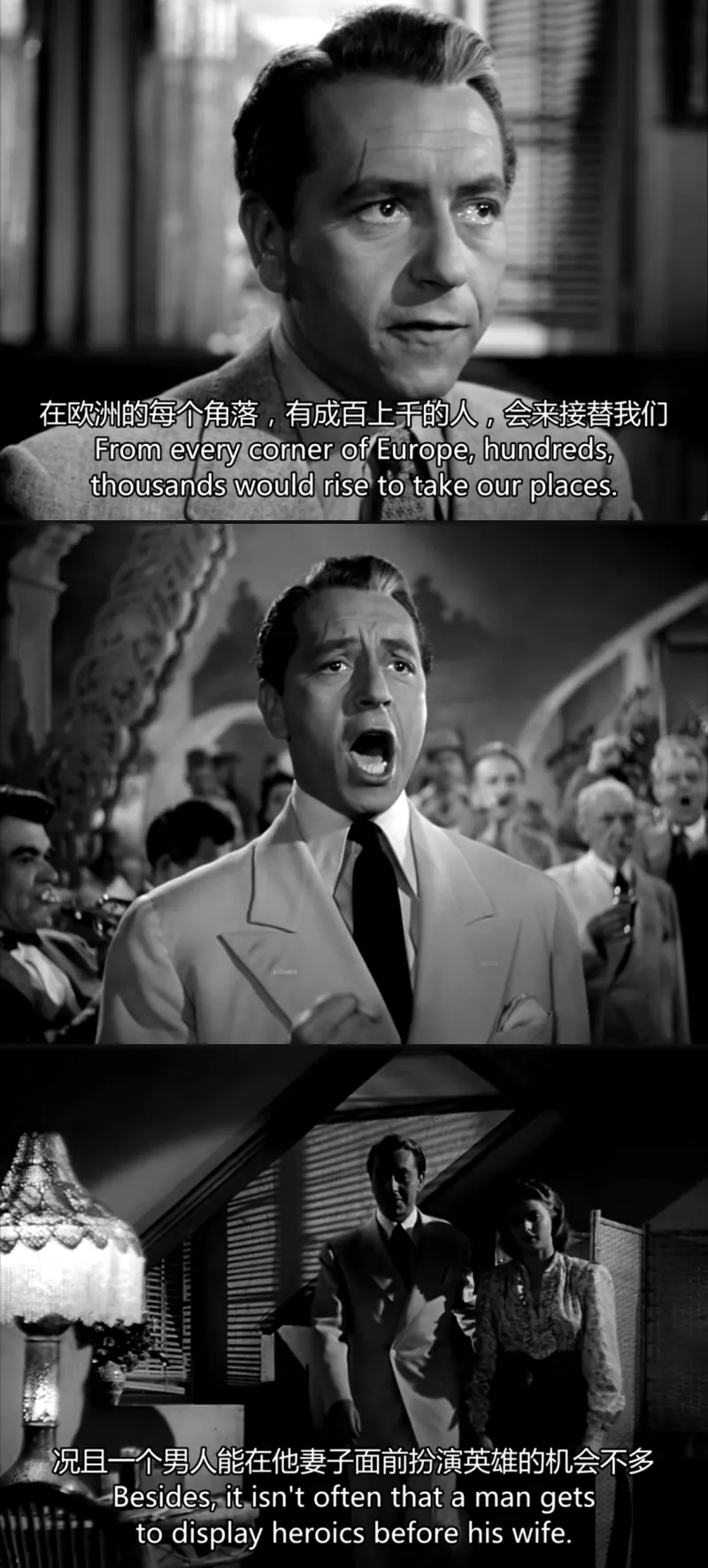
A cheaper romance would have made the husband dull or cruel so the audience could root cleanly for Rick. Casablanca refuses to make that easy. I saved three frames of Laszlo: his calm refusal to believe the resistance can be killed (“From every corner of Europe, hundreds, thousands would rise to take our places.”), the moment he walks over to the band and leads La Marseillaise to drown out the German officers, and his dry little joke back in the hotel room afterward (“Besides, it isn’t often that a man gets to display heroics before his wife.”).
Two men, one woman, and no clean answer
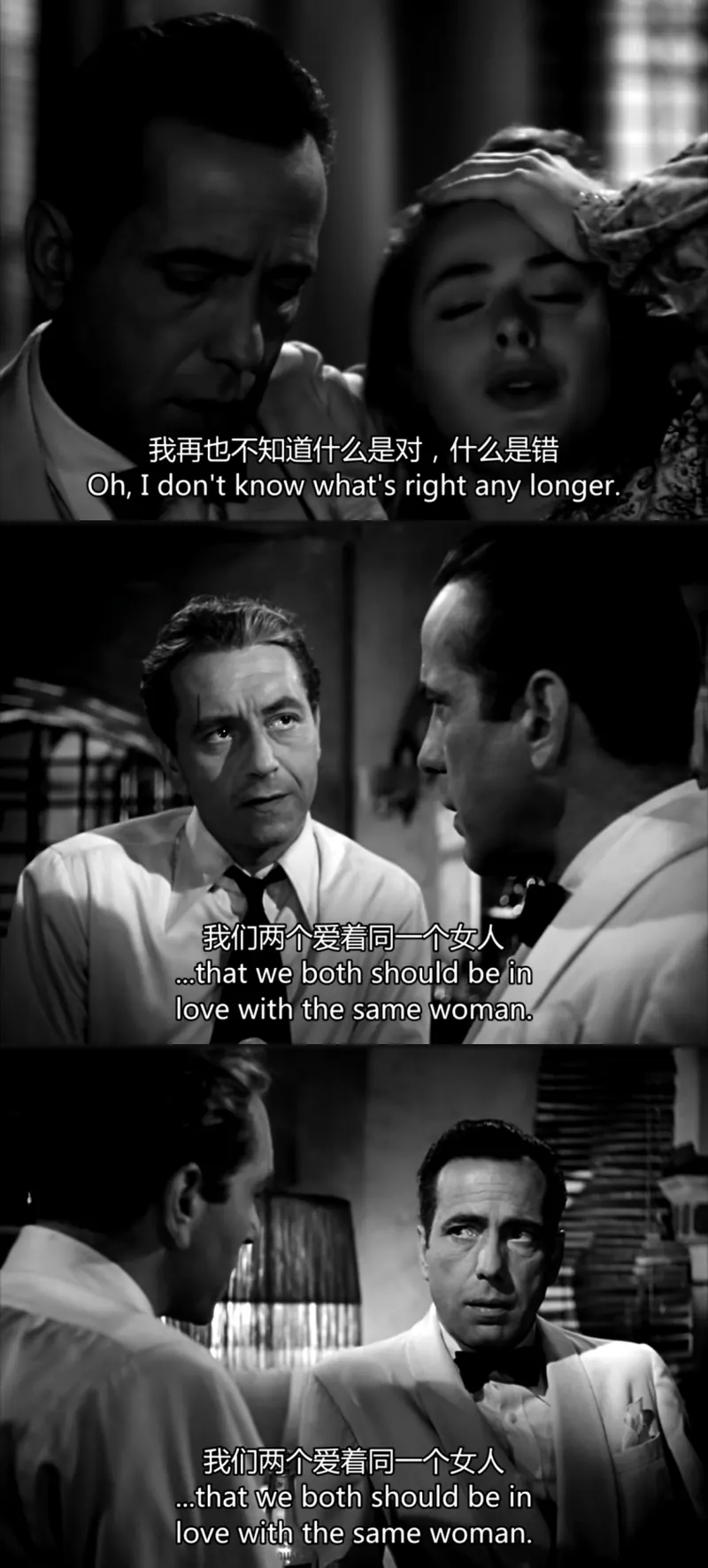
When Ilsa breaks down in Rick’s room—”Oh, I don’t know what’s right any longer.”—the film stops pretending anyone has a simple moral compass. Then Laszlo walks into Rick’s Café and says the quiet part out loud: that they both happen to love the same woman. In 2021 I screenshotted that exact subtitle twice in a row, once on Laszlo’s face and once on Rick’s. Watching two adults talk through an impossible situation with complete dignity still hits harder than any shouting match.
Three little people on the tarmac
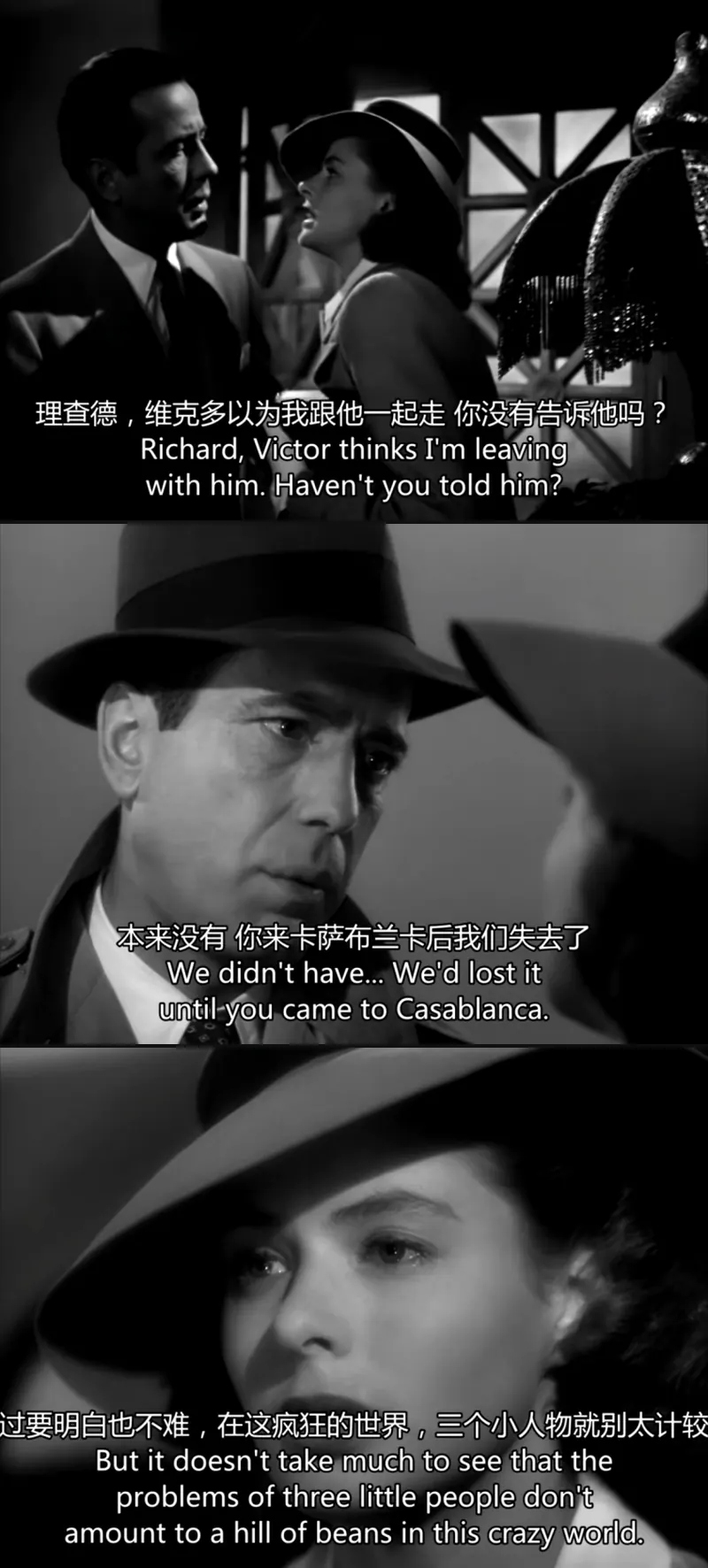
The last frames in the folder are the runway farewell. Ilsa realizes Rick has sent her onto the plane with Victor. Rick gives Paris back to her (“We didn’t have… We’d lost it until you came to Casablanca.”) and delivers the line that closes the whole argument: “But it doesn’t take much to see that the problems of three little people don’t amount to a hill of beans in this crazy world.”
Looking back at why my 2021 self left zero words in this document, the answer is obvious. When a script is this sharp, pausing the screen is already the whole review.