
I Never Saved Anything for the Swim Back: Revisiting Gattaca
Published:
On February 1, 2021, I finished Gattaca and saved nine screenshots in a Word document without writing a single sentence underneath them.
Author: Koutian Wu; GitHub: ktwu01
Reopening that file five years later, the nine frames tell their own story—even pasted backward from the end of the movie to the middle. When you flip them back into chronological order, they land on the exact three scenes that define Vincent Freeman.
Telling Irene it is possible
Andrew Niccol’s world in Gattaca is clean, polite, and ruthless: a drop of blood at birth decides how far you are allowed to go. Vincent is born naturally with a weak heart and a short statistical life expectancy, classified as an “In-Valid.” Irene has a far cleaner chart, yet even she has accepted the limits printed on her DNA printout as permanent law.
The first trio of frames I kept is Vincent answering her resignation quietly: “You’re the authority on what is not possible. For whatever it’s worth, I’m here to tell you that it is possible.”

Leaving nothing for the way back
The middle three frames show what that stubbornness actually costs. First, Vincent snapping when even the one person helping him starts warning him to stop (“Even you are gonna tell me what I can and can’t do now?”). Then comes the night swim against his genetically engineered brother, Anton.
Out in the pitch-black water, Anton finally asks how his weaker brother has managed to beat him—and to make it all the way to the launchpad. Vincent’s answer is the line everyone remembers from the film: “I never saved anything for the swim back.”
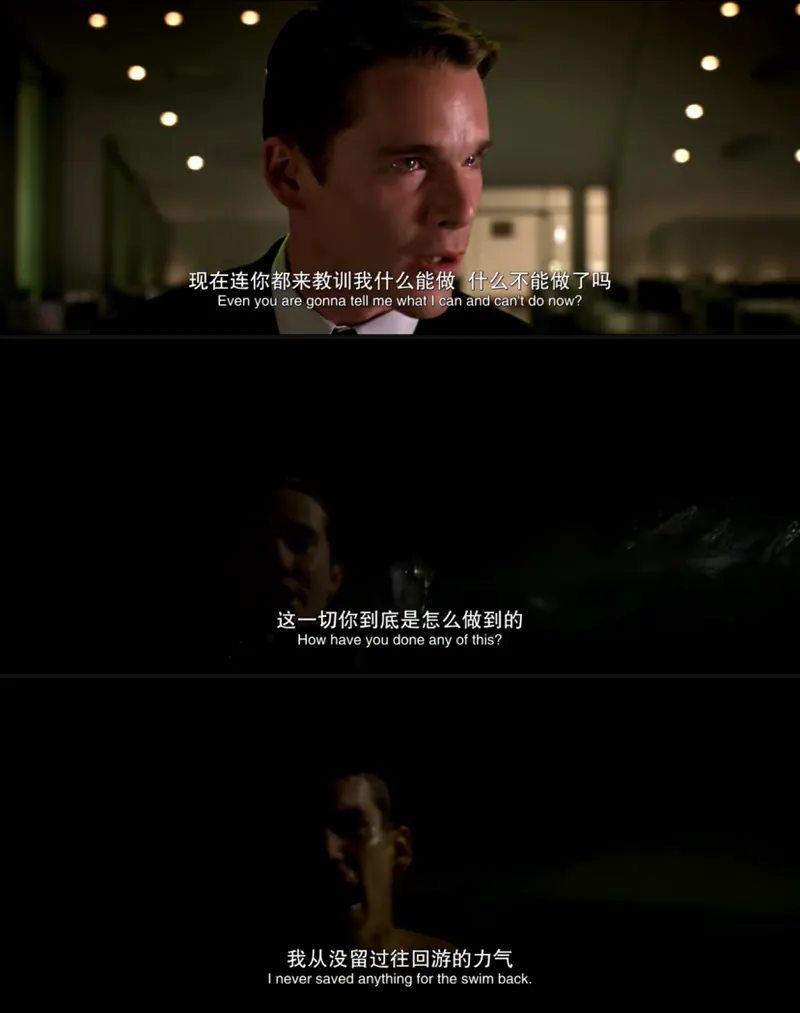
It is an extreme philosophy, and probably terrible risk management in everyday life. At eighteen, though, that sentence hits like lightning: if you keep planning your retreat while swimming out, you have already capped how far you can go.
Borrowing a body, lending a dream
What saves Gattaca from becoming a hollow hustle-culture parable is the final three frames in my 2021 file. Vincent never made it to Titan alone. Jerome—genetically engineered to win gold, paralyzed after settling for silver—gave Vincent his blood, hair, urine, and identity.
Right before launch, Vincent tells Jerome he has no idea how to thank him. Jerome looks up and settles the ledger in two sentences: “I only lent you my body. You lent me your dream.”
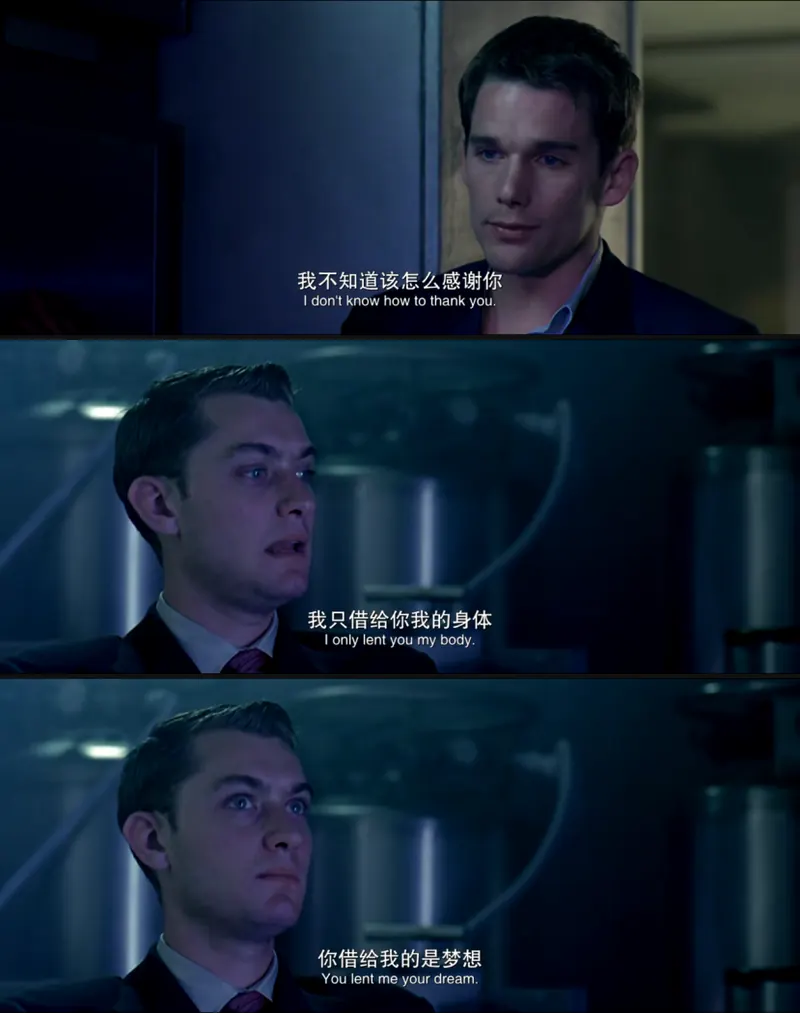
Looking back at these nine stills, the cleanest thing about the movie is that last exchange. Raw willpower gets you into the water, yet somebody else believing your dream is worth lending their life to is what carries you past the gate.